


Science & Public Policy
What's New in Science and Public Policy
Read the newest report on interventions that have been proven successful at decreasing risk of HIV transmission in the San Francisco AIDS Foundation’s
HIV Evidence Report
Confronting the "Evidence" in Evidence-Based HIV Prevention: Challenges and Opportunities
The past three decades have seen evidence-based medicine emerge as an approach to assess the effectiveness of clinical interventions that can shape HIV prevention. However, funding sources (including the CDC) increasingly define “evidence” as a product of randomized controlled trials—putting the development of new interventions beyond the reach of most community-based HIV prevention organizations, which typically lack the resources to hire professional researchers. Over the next year, the San Francisco AIDS Foundation in partnership with the Caucus for Evidenced-Based Prevention, is spearheading a series of focused discussions with all stakeholders, with the goals of defining and advancing a more productive way forward for evidence-based HIV prevention; reaching a consensus on an inclusive—yet still rigorous—notion of evidence, encompassing biological, behavioral, and social sciences; and including the lived experiences of individuals and communities affected by HIV/AIDS. Please visit http://www.sfaf.org/evidence to learn more about these activities and the overall initiative. We’re also compiling an archive of some of our conference sessions on this topic. Most recently, we’ve added video and audio from the 2007 United States Conference on AIDS and the 2007 National HIV Prevention Conference.
Science and Public Policy at the San Francisco AIDS Foundation
Since its earliest years, the San Francisco AIDS Foundation has played a leading role in the development of sound HIV/AIDS policies at the federal, state, and local levels and ensuring that elected officials develop an appropriate response to the epidemic. The agency has fought to protect the human rights of people living with HIV and to promote the development of effective HIV treatment and prevention strategies.
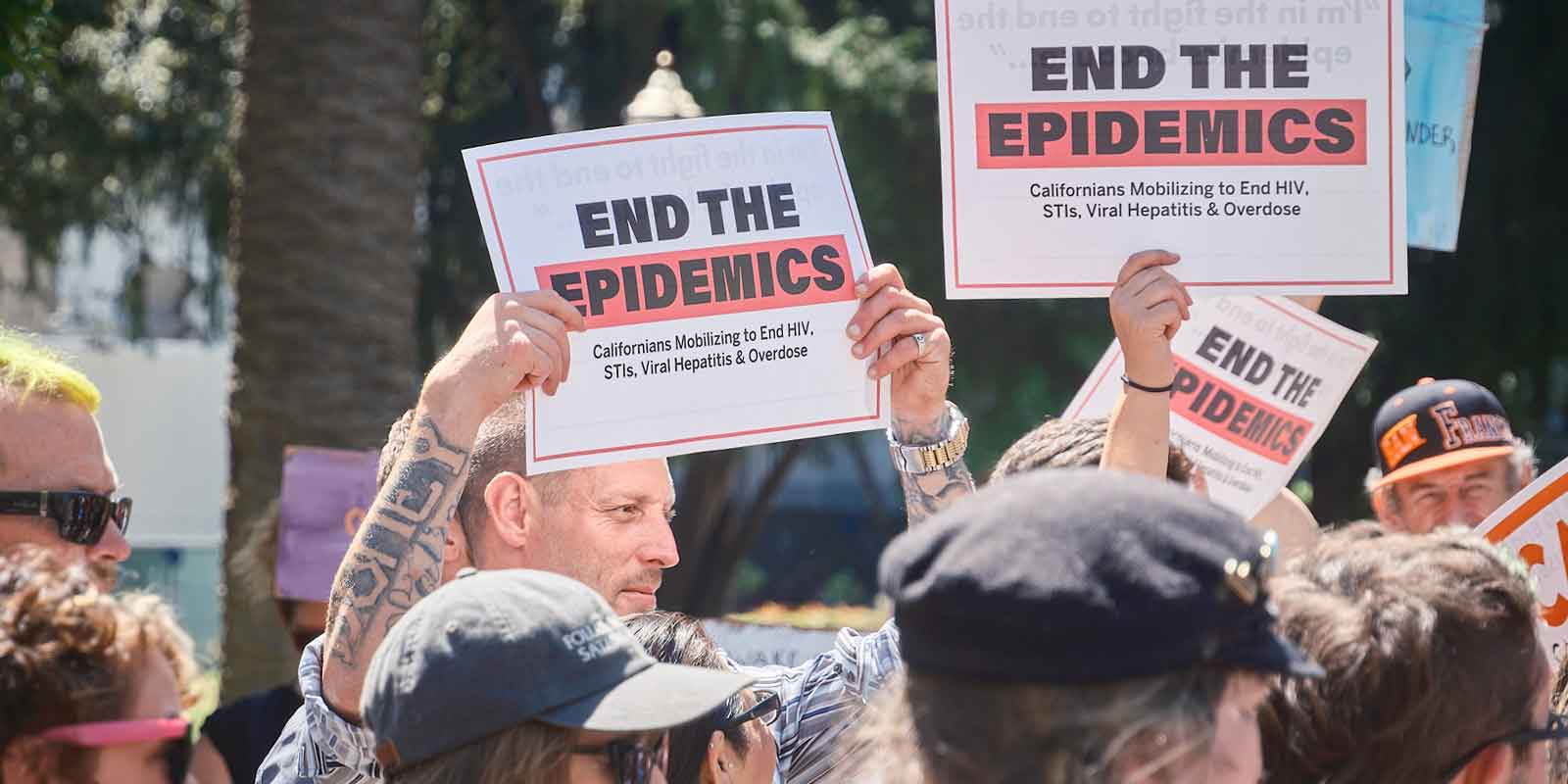
AIDS advocates rally in San Francisco in support of ADAP.
Working alongside other advocates, our Public Policy Department has had many successes and accomplishments over the years, including:
- the development and passage of the, Ryan White CARE Act, which now provides over $2 billion in critical funding for services for people living with HIV/AIDS, including drug treatments, primary medical care and essential supportive services;
- the enactment of the Housing Opportunities for People with AIDS program, which provides nearly $300 million annually in funding for housing support for people living with HIV/AIDS;
- the creation of the Minority HIV/AIDS Initative which provides $400 million for HIV/AIDS programs that directly benefit racial and ethnic minority communities who are disproportionately affected by HIV;
- full funding of California's AIDS Drug Assistance Program, a life-saving program that provides HIV/AIDS treatments to over 30,000 individuals who otherwise could not afford these medications;
- passage of legislation in California that allows jurisdictions to legalize needle exchange programs and the sale of sterile syringes at pharmacies without the requirement for a prescription; and
- the development of materials and policies to assist Medicare eligible individuals living with HIV/AIDS in understanding and preparing for the implementation of the newly created Medicare Prescription Drug Benefit, also known as Medicare Part D.
The grassroots power of the individual, working in coalition with others, continues to be a critical force in assuring a compassionate and effective response to the HIV/AIDS epidemic. To that end, the Public Policy Department runs and mobilizes the HIV Advocacy Network to engage community members directly in our advocacy work. We encourage readers to sign up for the San Francisco AIDS Foundation Action Center and to subscribe to receive HIV Advocacy Network alerts and HIV Policy Watch, our monthly bulletin on key HIV policy issues.
Page last updated: 9/11/2008