



Younger Queer advocates and ACT UP generation activists unite to bring social change
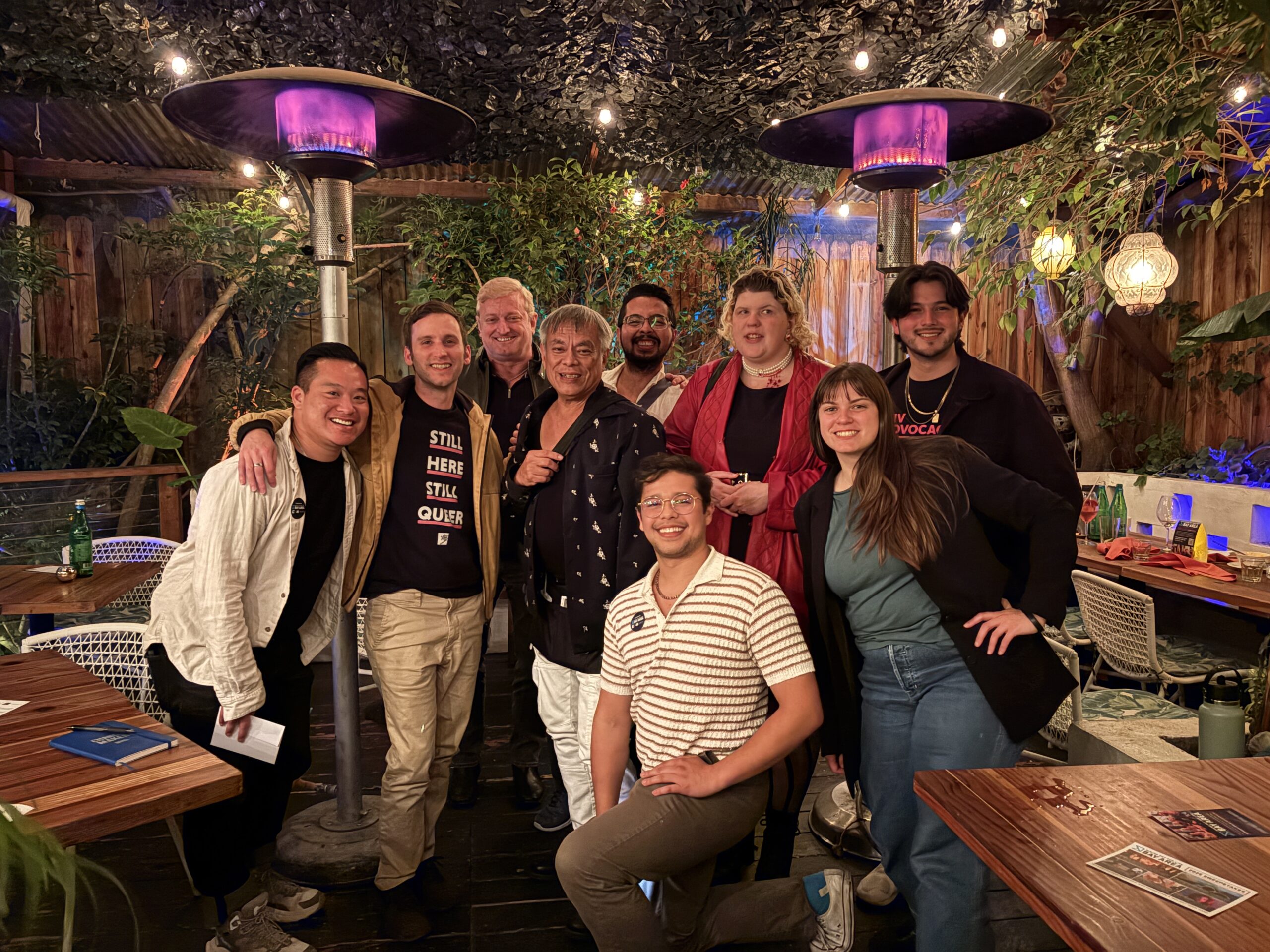
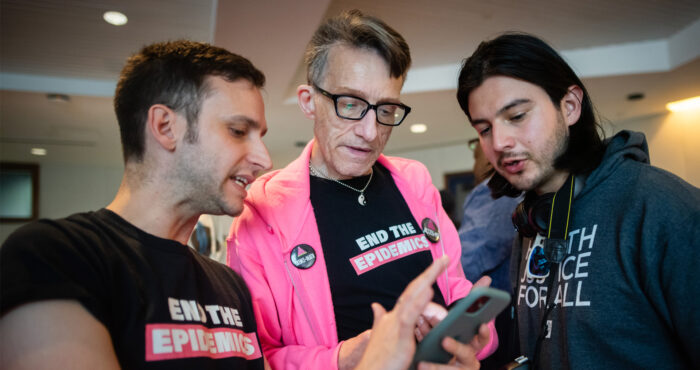
Glancing around the room at a typical HIV Advocacy Network (HAN) meeting, it may not be easily apparent what brings together such a diverse group in shared community. Younger Queer and trans group members sit alongside older ACT UP generation gay men. In addition to bridging generations, the group brings together people of all races and ethnicities, gender identities and sexual orientations, who bring their passion for any number of social change issues to this grassroots advocacy network.
“The diversity of our group is huge,” said Ande Stone, director of community mobilization & policy. “The different perspectives that people bring to the group is incredibly enriching. We all have different backgrounds and identities, but we’re united and coming together for shared goals.”
Community members, activists, and change-makers in the Bay Area come together through HAN with a commitment to ending the HIV and AIDS epidemic and improving the lives of communities impacted by HIV.
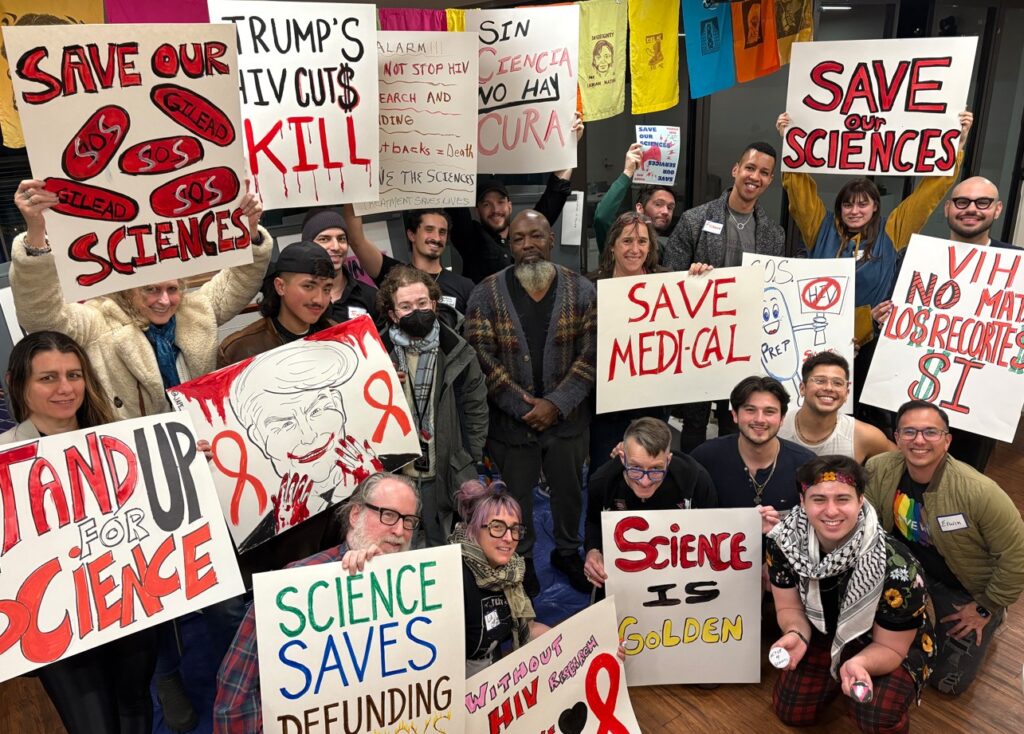
Although the group is coordinated and maintained by San Francisco AIDS Foundation, the group has its own leadership structure that empowers group members to lead outreach and engagement, training, and policy education. In addition to HIV and AIDS-related issues, the group mobilizes around aligned issues including harm reduction, HIV and aging, trans rights, and housing and homelessness.
HAN members hold rallies and public protests, support aligned local coalitions, travel to Sacramento and D.C. to meet with legislators to advance policy and funding issues, arrange community policy education events, and testify in support or opposition to local policy and funding initiatives.
The group benefits from a strong partnership with SFAF’s Aging Services department, led by Vince Crisostomo, a long-term HIV survivor and notable community activist.
“When we began building the current iteration of HAN, Vince and other Elizabeth Taylor 50+ Network members were so integral to that process,” said Stone. “They helped us build a solid foundation to grow from, and we’ve seen explosive growth in the group in the years since. And their involvement has brought intergenerational learning to the group.”
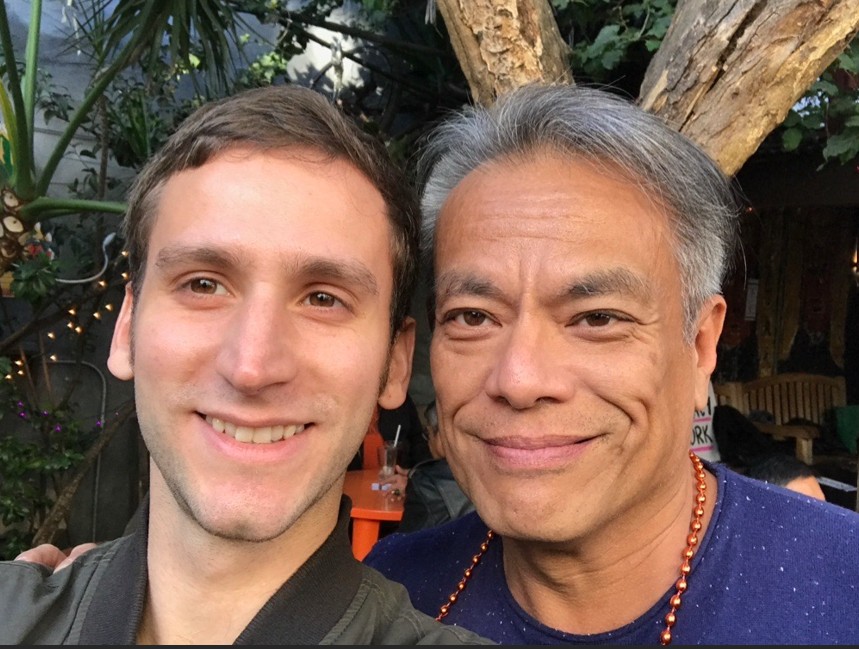
Although HIV and AIDS activism looks different now than it did in the ‘80s and ‘90s, Crisostomo said its importance hasn’t diminished.
“Back in the ‘80s, we were fighting for our lives,” he said. “We had nothing to lose. Now, we’re fighting for everything we have gained. And the basis for all of this is our right to exist.”
Crisostomo said that he has seen people from his generation step away with the advent of increasingly effective antiretroviral therapies through the ‘90s and to this day.
“People became kind of complacent. They wanted to leave the past in the past. Maybe some were missing the motivation to be engaged. But we still have another chapter to write.”
Crisostomo encouraged people in his network to get engaged in the work of HAN. Over the years, group members have supported and fought for everything from local funding for HIV and AIDS-related services, to mpox funding and treatment, to federal investment in HIV programs and research. Currently, group members are supporting an effort locally to bring Department of Disability and Aging Services (DAS) funding to seniors living with HIV.
The group as a whole benefits from the history, knowledge, and legacies of ACT UP generation activists and the new energy and tactics younger members bring.
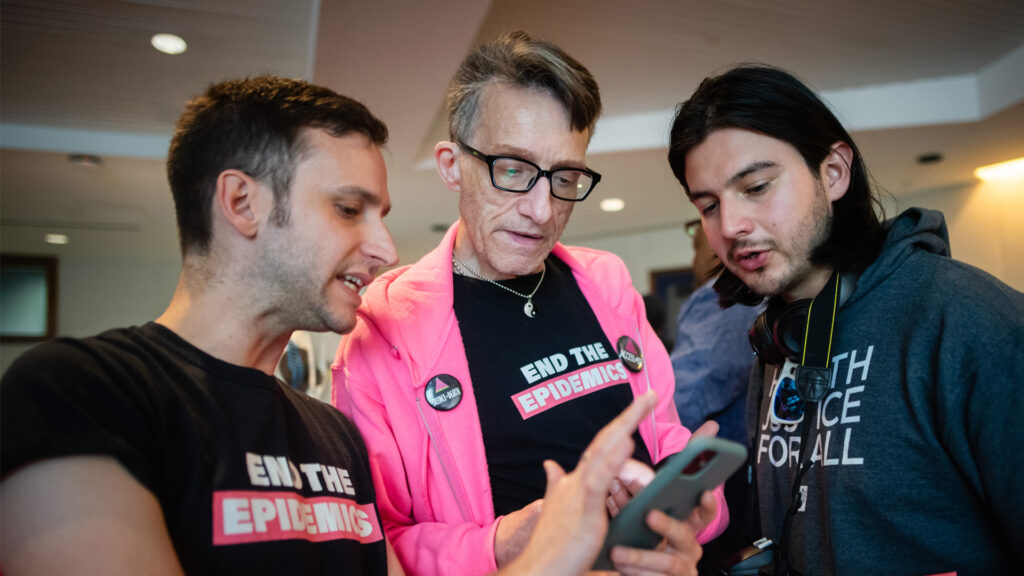
“We do stand on the shoulders of giants,” said Stone. “In some ways, activism now looks very different than it used to. There’s been this huge advocacy infrastructure that’s been built. We also have developed systems of care to be able to protect our communities that did not exist when folks were fighting in the ‘80s. We don’t have to build it all from scratch, but we can still learn from the past in order to apply it to the modern context.”
Crisostomo and Stone said they appreciate the learning that happens in the group–on all sides. Group members navigate issues around grief, stigma, and other issues together, sometimes in the context of parallel movements.
“We’re breaking down silos,” said Stone. “Younger activists develop these enriching relationships with elders that they may not already have in their lives. And it’s been great for older members to develop relationships with the next generation of activists. The intergenerational connections we see in the group are really beautiful, especially for folks that have chosen families. There’s mutual respect on both sides, and that’s what makes this work so beautiful.”