



As San Francisco explores the best ways to support and help people who use substances, we’re going straight to the source: asking people with lived experience to share how they’ve been empowered to make changes in their own lives.
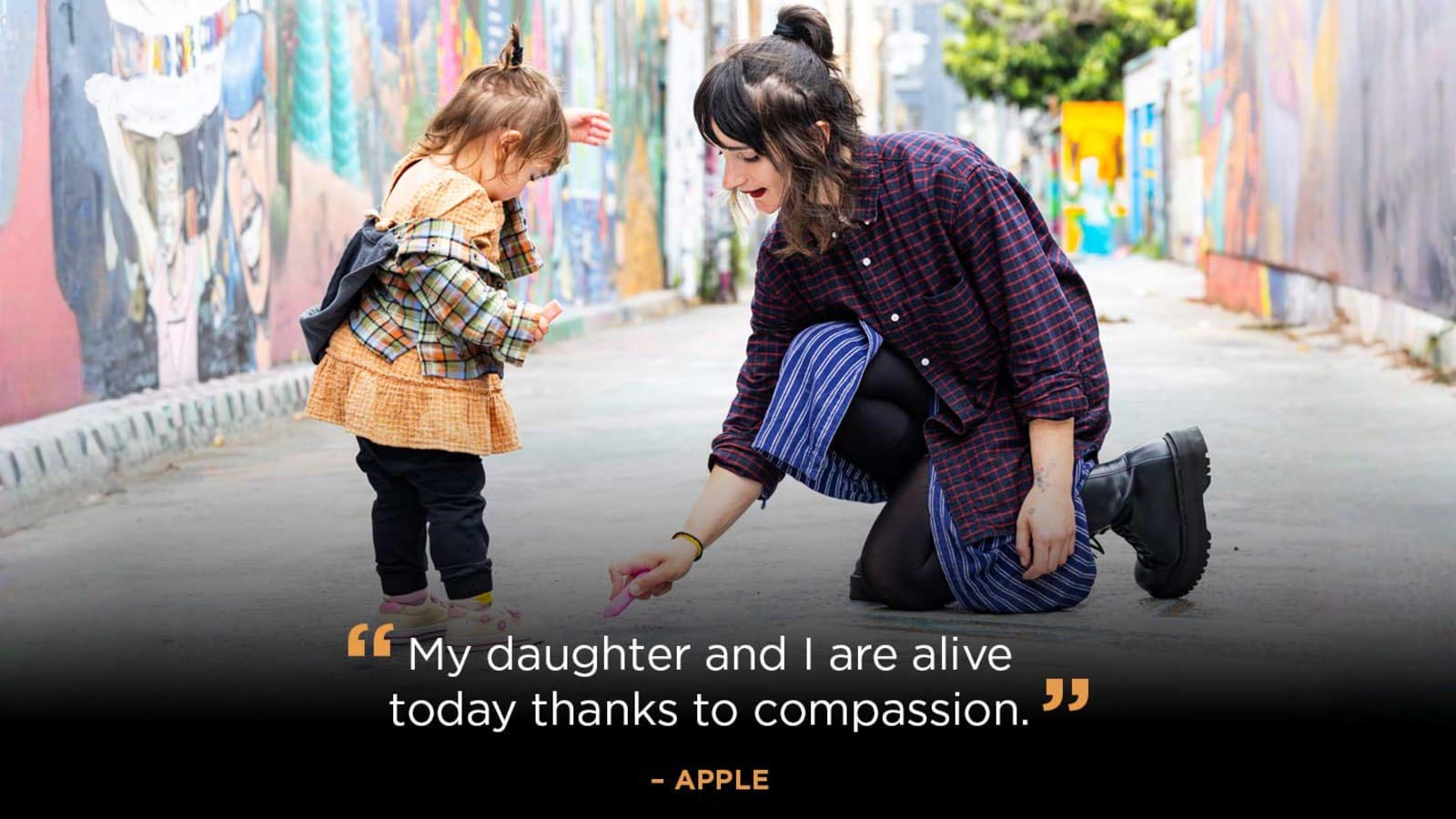
After a traumatic experience trying to quit “cold turkey” from opioids, Apple found the compassionate support and care she needed to stabilize her health, end her substance use, and feel human again through Team Lily.
Read Apple's storyAt 29, I was unhoused, deep in opioid use, and pregnant. I had already lost a pregnancy trying to quit cold turkey from heroin several years before. I was set on having a healthy child this time around, but to do so I would first have to find a way to leave everything I knew behind—the substances that delivered me from physical and emotional pain, and life on the streets—not cushy, glamorous or at all comfortable—yet, after living that way most of my life, comforting.
Then, during a rainstorm that destroyed my camp, outreach workers encountered my partner and I curled up under a piece of plastic, up to our knees in water. They got us into the shelter of a hotel room that same night. There was no concern about whether we might be using drugs or not. They didn’t ask any nosey questions–they just helped us because we were desperately in need of help, no strings attached.
Because I finally had somewhere indoors to stabilize and seek medical care for my pregnancy, I ended up making my first prenatal check up with Team Lily. I did not show up. I had spent the last week laying on the bed too sick to move, now 4 months pregnant, withdrawing from opioids. But I received a phone call from a perinatal stabilization nurse who at the time was working with Team Lilly. She asked me why I hadn’t shown up to the appointment. Not knowing what else to do, I told her everything that I was experiencing. The drug use, the painful, twisting cramps and bloody vomit, and that I’d been sick for a week… I told her how I wanted to stop using but had no idea how, and that I was afraid because of what happened the last time.
She told me she could come pick me up and take me to the hospital within the hour. That they could help me taper off the opioids safely and my baby would be much more likely to be born healthy if I got medical treatment.
I wanted to run, as I had so many times before. Running was my default coping mechanism, and for good reason; doing so saved my life more than once. Yet at the same time, I wanted to surrender to the promise this person–a public health nurse I had never met in person–was offering me: that if I went with her now and checked myself into the hospital, I’d be able to get the help I needed so my child could be born safe, healthy, and free of dope in their tiny body.
That meant more to me than anything else. It gave me the strength to resist my instinct to bolt, as well as the yearning desire to use “just one more time.” If I wanted things to turn out differently this time, I couldn’t run. I couldn’t keep coping by doing everything on my own. I had to take a chance and trust her.
When Dana arrived at the hotel room to pick me up, things were hazy. I remember scrambling to shove some of the used needles from that final week under the bed. There was a puddle of bloody vomit staining the floor–too big to wipe that I hoped she wouldn’t notice or smell.
I pulled on the cleanest clothes I could find. I remember it taking an enormous amount of energy just to raise my arms and drag a shirt over my head. I forced myself to the sink, splashing cold water on my face, trying to shock myself into the present moment so that I might sound more coherent than I was. Fear gnawed at me: what if, when she saw me, she decided I was too far gone? What if she changed her mind about helping me? Worse, what if she thought it safer to call the cops and let them deal with me?
Memories of the foster care system loomed in the back of my mind–those long adolescent years spent running from placement to placement, slipping through the cracks only to be dragged back into another, more “secure” institution. Each time stripped of all freedom, dignity and sense of who I was. How could I trust that this would be any different?
But somehow Dana dispelled all my fears of being captured and criminalized the moment she walked in the door. I don’t remember what we said to one another in that hotel room, but I do remember her patience, her kindness. She came with no judgment, no criticism, no conditions. She asked if I had everything I wanted to bring, and welcomed my partner to remain by my side, which was crucial for me. I needed the person I loved and trusted there to support me in taking that step, and thankfully she understood that. She showed compassion from start to finish, and a genuine concern for my safety and well‑being.
It was unlike anything I had experienced from a “provider” while struggling with heavy use. For the first time in forever I felt like I was HUMAN again.
When we arrived at the hospital, Dana had them bypass triage and take me straight to the antepartum unit. I began medication-assisted treatment, slowly tapering off opioids in a safe, supervised way. I was profoundly grateful that they allowed the process to be gradual, listening to how I felt with each adjustment to the medicine–letting my body’s indicators lead the process, and prioritizing my comfort.
During a check-in with the Addiction Medicine Specialists, I mentioned to them how progressive and unusual it seemed that they treated me so well–especially sparing me the hell of dopesickness, even though it required starting me on record-high doses of opioid medication just to stabilize my body. They returned with a smile and said something like, “Happy mom, happy fetus.” The idea was simple: if my body remained under the stress of withdrawal, my baby would experience that same stress.
The words pulled me back to those agonizing weeks of my first pregnancy, when I had tried to quit heroin cold turkey, locked alone in my room. I remembered the walls closing in, the ceiling tilting, slipping in and out of consciousness, slammed back into my body with every dry heave when there was nothing left to bring up. I thought of what my unborn child must have felt then–could they sense the fear, the pain?
For a minute my heart felt like it was going to crumble under the weight of that memory… but it gave way to gratitude. Gratitude that this time was different. These people weren’t ruled by liability or red tape. They weren’t swayed by stigma about my past. They took me at face value. They were simply there to help. For the first time in so long, I felt as though my life had value. That recognition rekindled a sense of self-worth in me, fueling a fierce drive to recover–to do whatever it took to walk a path toward stability and wellness, a path where my daughter could thrive, and where I could thrive with her.
My daughter was born safely. After two months in the neonatal ICU, I was able to leave the hospital with her and enter a residential treatment program for women and children. My partner completed treatment as well, and together we obtained permanent housing here in San Francisco. We now celebrate over two years of sobriety, and our CPS case was closed more than a year ago. My daughter is a sassy, joyful, curious toddler, and I could not be more ecstatic to be her mother. None of this would have been possible if San Francisco’s services had demanded abstinence first, or if I’d been forced into treatment by police or judges. If I had been locked up or left with no safe options, my daughter and I likely wouldn’t be here.
These services worked for me because they were voluntary. They met me with dignity, and kept me alive long enough to choose recovery. You cannot force healing. You cannot punish someone into recovery. One thing is certain, I don’t know where I would be if it were not for the services that humanized me, and the humans who believed in me.
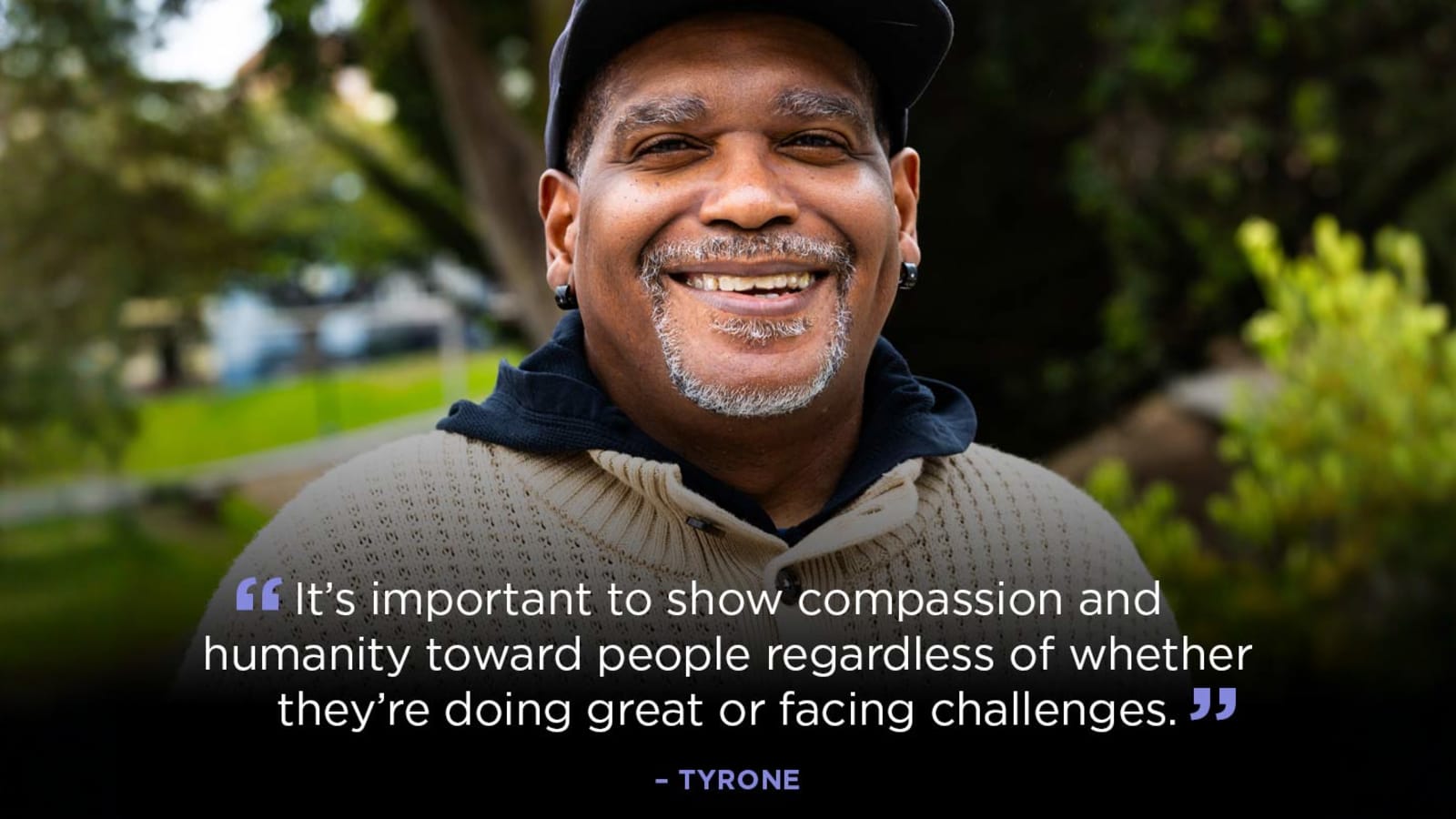
After more than 20 years of meth use, Tyrone decided to make a change. The non-judgemental approach of a contingency management program, where he received plenty of peer support, put Tyrone on a path to recovery—and a life‑changing career.
Read Tyrone's storyFor many years, Tyrone Clifford didn’t worry about his meth use.
After an HIV diagnosis when he was 21, at the height of the AIDS epidemic, Clifford abandoned much of the concern he held for his health, longevity, and life.
“At that time, doctors just sent you out with an expiration date,” he said. “Until that point, I didn’t do drugs, drink or even smoke cigarettes. But I just remember thinking to myself, ‘Why continue to be a good boy?’ I decided to start enjoying myself, and so I started using meth when I was 22.”
His meth use continued–off an on–for the next 20 years. Although his HIV doctor at the time didn’t approve of his substance use, she didn’t ask Tryone to make changes to his use as long as he kept his medical appointments and stayed adherent on his medications.
During that time HIV treatments improved–immensely–and Tyrone was able to stabilize his health.
He remembers a day at his HIV doctor’s office when the conversation around his substance use changed.
“We’re sitting in her office going over my lab results. She’s typing on her computer, and just slowly pulled her glasses down on her nose and looked at me. She said, ‘If I thought you were going to die in the next couple of months, I would tell you to continue to enjoy yourself. But you’re way too healthy for this–and maybe you should think about doing something about your meth use.’”
Clifford went home, thinking about her assessment and recalculating the effects of his use. In the following week, he went back to see her to find out how he might address his use.
“The first referral didn’t go so well,” said Clifford. “Instead of listening to what I needed, I heard from the psychiatrist a list of things I had to do. He already had a plan in mind for what to do: leave my home for three months, go to an inpatient program, attend a step-down program, and more.”
At the time, Clifford’s husband had recently had major back surgery. He knew he wouldn’t be able to leave his home and his husband for even a week–much less a month or longer. He politely declined the psychiatrist’s treatment plan, and returned to his HIV doctor.
This time, she referred Clifford to a social worker, who was ready to listen and find a program that better fit Clifford’s needs. She gave Clifford a flyer for a contingency management program named PROP, which he decided to join.
PROP is a three-month outpatient substance use treatment program that supports people interested in making changes to their use of stimulants like meth and cocaine. The term “contingency management” refers to a small incentive structure that’s tied to changes in substance use–people in the program who test negative for stimulants on urine drug screens receive small awards toward a gift card that they receive at regular intervals through the program.
Clifford didn’t start the program confident that he’d be able to maintain his sobriety long‑term.
“Initially, I thought, ‘I can do three months at least. You know–I do that all the time when my dealer’s away. And when I’m done, I’ll have $330 to go get high with.’ But long before that three months was up, my focus had totally changed.”
Clifford found much more from PROP than small incentives rewarding his sobriety. He found valuable peer support, a welcoming group environment, and staff who supported members no matter their goals or progress in the program.
“I felt safe,” he said. “I felt like I belonged. There was a great sense of camaraderie with the folks in the group because even though all of our goals were different, we were still working on changing our use of the same substance. We were able to share life experiences and get similar support around them. It felt like I wasn’t the only one going through what I was going through.”
Clifford diligently attended the three-day-per-week program for the entire three months, attending groups to give and receive support from others, discuss life goals, and strategize ways to sustain longer-term changes. He hasn’t used meth since.
“One thing that helped is that the program allowed me to set and make my own goals–and not feel shame or judgement for my own decisions,” he said. “I knew I wanted to stop using meth, but decided that I would still be able to enjoy a glass of wine with my husband. Or take a hit off a joint if I wanted to. Those drugs weren’t causing me any bigger issues.”
During this time, he decided to go back to school in order to become a certified substance use counselor.
“When I received my gift card for $330, I went to Best Buy and bought myself the best little laptop I could get for $330 and enrolled in classes at City College.”
After obtaining his certification, Clifford came back to the substance use treatment program he had graduated from–first as a clinical intern, and then as a full time staff member. He’s been employed with the contingency management program for more than a decade, and sober from meth for even longer.
“After so many years of doing drugs, I do have a pretty good perspective and understanding of the people sitting in front of me who want to address their substance use. I can definitely relate, and can definitely empathize with what people are going through. I also really enjoy seeing the progress people make–even over three short months. Not only are clients making changes to their substance use, but they’re also getting connected to housing services, health care, HIV care, and other substance use treatment services. It’s really beautiful.”
Clifford thinks back to the misconceptions he held about substance use treatment services–and the warmth and acceptance he found from PROP instead.
“It was the opposite of what I imagined it to be,” he said. “Everyone looked happy to be there. And I thought to myself, this is what is going to help me. And it did.”
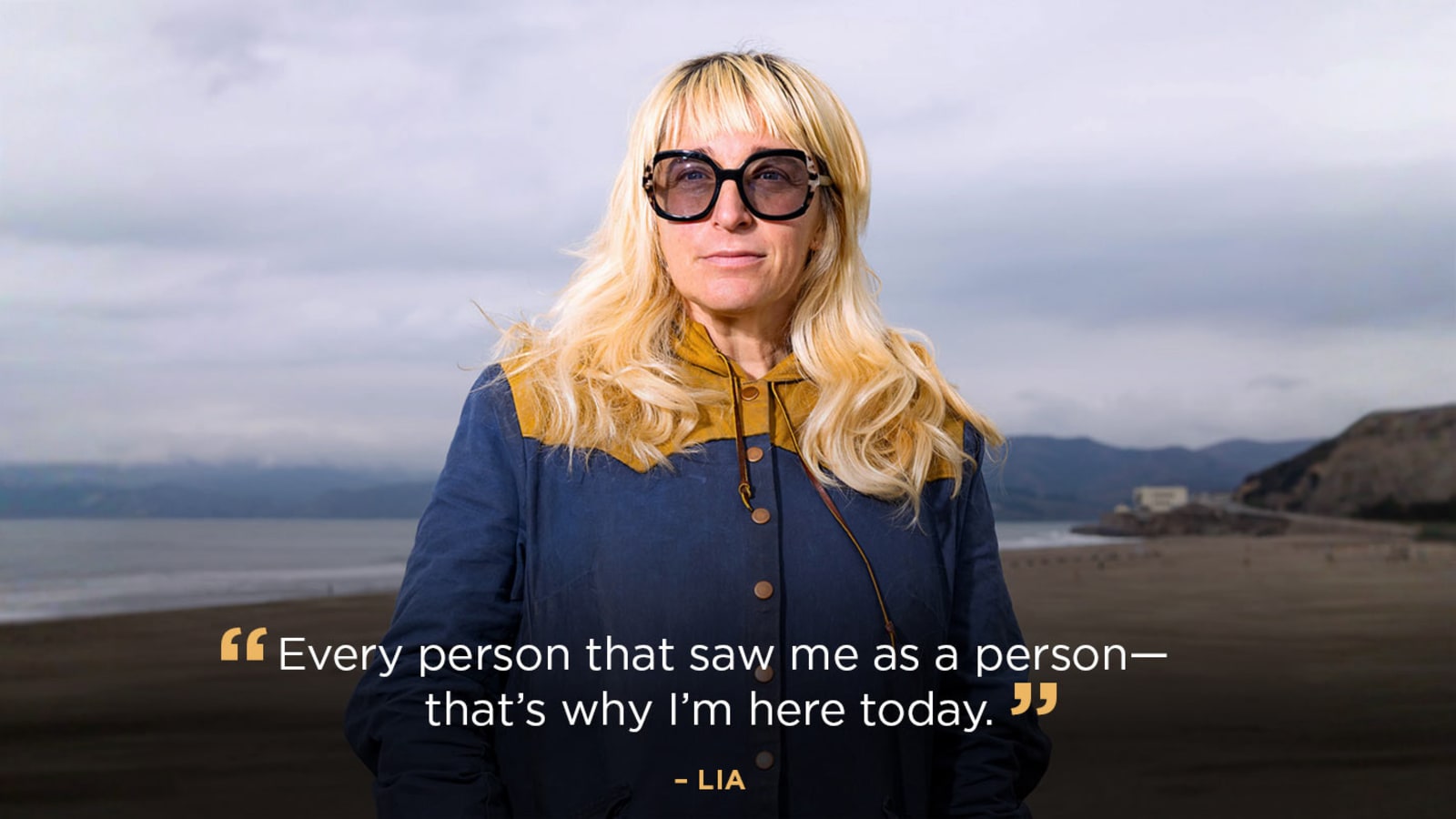
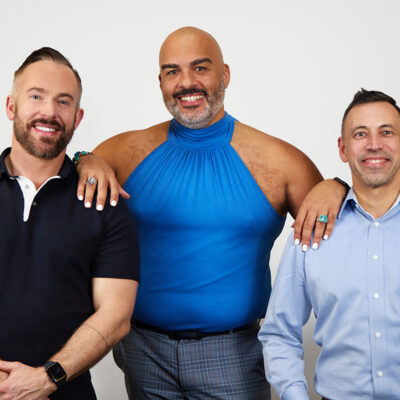
Lia began using substances as a way to cope with early trauma. But after more than a decade using substances, she had reached a low point–unhoused and physically sick–and couldn’t imagine a way out. Then came hope, in the form of small acts of kindness.
Read Lia's storySeeing Lia today, you would never imagine her the way she describes her life at the height of her substance use and addiction.
Today, Lia is a warm, vibrant, outgoing health outreach worker at a San Francisco nonprofit, a proud mother of two children, and an outspoken advocate for some of San Francisco’s most vulnerable community members. At her lowest point–just before she pursued sobriety–Lia herself was one of those vulnerable community members.
“I remember people would literally move their kids away from me when they were walking down the street,” said Lia, who at the time was living outdoors. “I was maybe 80 pounds. I had lost a good-sized portion of my hair at the back of my head, and had a bald spot right where a yarmulke would go. I had a mask of scabs because I have lupus, and was living outdoors. I was having seizures. Towards the end, I was literally dying,” she said.
Lia’s situation wasn’t quite so dire when she began using substances, but her use did begin from pain and trauma. At 15, Lia started using what she described as “hard” drugs to escape PTSD and early childhood trauma.
“I wanted it to be quiet,” she said. “I wanted a reprieve. I just wanted to feel OK. At the time, I didn’t feel OK in my body, or in my mind. Honestly, I just wanted to kill myself for a long time–since I was young. Without drugs and alcohol, I would have killed myself. The drugs and alcohol treated what I was going through–they helped me to live.”
It was the ‘90s. Lia immersed herself in the music and art scene. There was a lot of partying, and at times life felt glamorous. Her use caused issues, though, and Lia always had an awareness that things could be different. Things slowly got darker and darker, as her use intensified and her living situations became more precarious.
“I really wanted to want to quit,” she said. “And I would do things almost on purpose–self harming things. I would teeter on the edge quite frequently.”
Lia injected drugs for 15 years. For many years, she had no access or awareness to safer use supplies. She used needles over and over again, giving herself abscesses and skin infections. She still has a needle fragment stuck near her femoral artery, which broke off years earlier after repeated use.
Eventually she found services at San Francisco needle exchanges. They were a place of refuge, of compassion, and care.
“They treated me kindly. They treated me with dignity. They gave me clean needles so that my arms could heal. Some of the care I found did make me feel better about myself, made me think I could pursue sobriety.”
In those 15 years, she went to seven inpatient rehab facilities to try to quit. Nothing stuck.
During this time, Lia said she felt less than human. Life was small and dark. She was isolated, lonely, and didn’t know how to escape from the impossible situation she was in. She spent her time sleeping in the dunes out at Ocean Beach, then traveling to the Tenderloin during the day to hustle up money and buy drugs.
“I was unhoused for a year, and it was a really long year. It was really hard. I would sleep out at Ocean Beach because it was safer and nicer than sleeping downtown. But I would try to save a shot for the morning, and never could. So I’d wake up, totally dope sick, and immediately have to think, ‘How am I going to survive today?’ I’d have to pull my legs, which were covered in open wounds, out of my sleeping bag. They would stick to the fabric. And then I’d have to ride the bus all the way to the Tenderloin. It was a terrible time.”
It wasn’t until she was at her worst–when there “was nothing left,” that Lia found a source of hope.
“I was so lonely and desperate. I didn’t feel like a person. I remember looking at a restaurant, and thinking to myself, ‘I will never eat in a restaurant like that again. I felt like I was going to die like that. And then I found someone who showed me kindness.”
There was a bouncer outside of a bar that Lia used to pass by who was friendly to her. When others didn’t acknowledge her presence, he chatted with Lia–a small act of kindness.
“Even just taking the time to notice me and acknowledge me was a big thing,” she said. “And there was another guy, who worked behind the bar. They both treated me like a human. They talked about their lives–and although they were both sober, they didn’t push that on me. Instead, they lead by example.”
The men introduced Lia to a female friend from a recovery group. At first, Lia felt hesitant, but she was so lonely and desperate that she decided to open up. When she felt ready to try rehab again, her friends helped her find and get into a rehab on the peninsula. This time, she stayed at the rehab facility for months, and then continued her recovery journey through AA.
What sticks with Lia are the small moments of kindness she received when she was at her worst. The kindness, from the bouncer and the bartender, and the people from needle exchanges she frequented during her use that “actually saw me and didn’t ignore me.”
She remembers a harm reduction volunteer in the ‘90s who would visit the house where she was staying in San Diego to drop off clean needles and pick up the used ones for all the people in the house. At the time, she was in a bad state–her health suffering and also experiencing effects of her PTSD.
“This guy would talk to me about everything I was going through. He would just listen. He wanted to help. And we would talk about ways to possibly get sober. He treated me like a human, and I do think he also had a role in saving my life. Whenever someone was able to touch me, that was huge. Having someone talk to you, touch you, that made me think I might be worth saving. Every person that saw me as a person–that’s why I’m here today.”
Lia has been sober for 16 years.
These days, Lia brings her understanding, compassion, and empathy to her work with people who use substances, ensuring they have the resources and support they need to improve their health and lives. She serves on the Shelter Grievance Advisory Committee, advocating for the needs of unhoused residents in San Francisco, and helped to found a navigation center for transgender women sex workers. She’s raising two beautiful children, still in elementary school.
“I fight like hell for my clients,” said Lia. “I know what they’re going through. I listen to them. Sometimes they just need to be listened to. That’s part of the reason why I do this work, is because a lot of people don’t see those folks as people. And you know, every one of those people is somebody’s kid. We need to fight for our unhoused neighbors. We need to work together. Our society is only as healthy as our sickest person, right? We need to take care of each other.”
These days, Lia sees hope and possibility where once there was only darkness and cruelty. She has a supportive partner, a loving family, and many friends. Recently, she completed a 545 mile fundraising cycling event–riding her bike from San Francisco to LA–to raise funds to support the free services offered by the nonprofit she works for.
“I’m proud of the life I have now. I’m still alive. And I feel like I am able to do good in this world.”
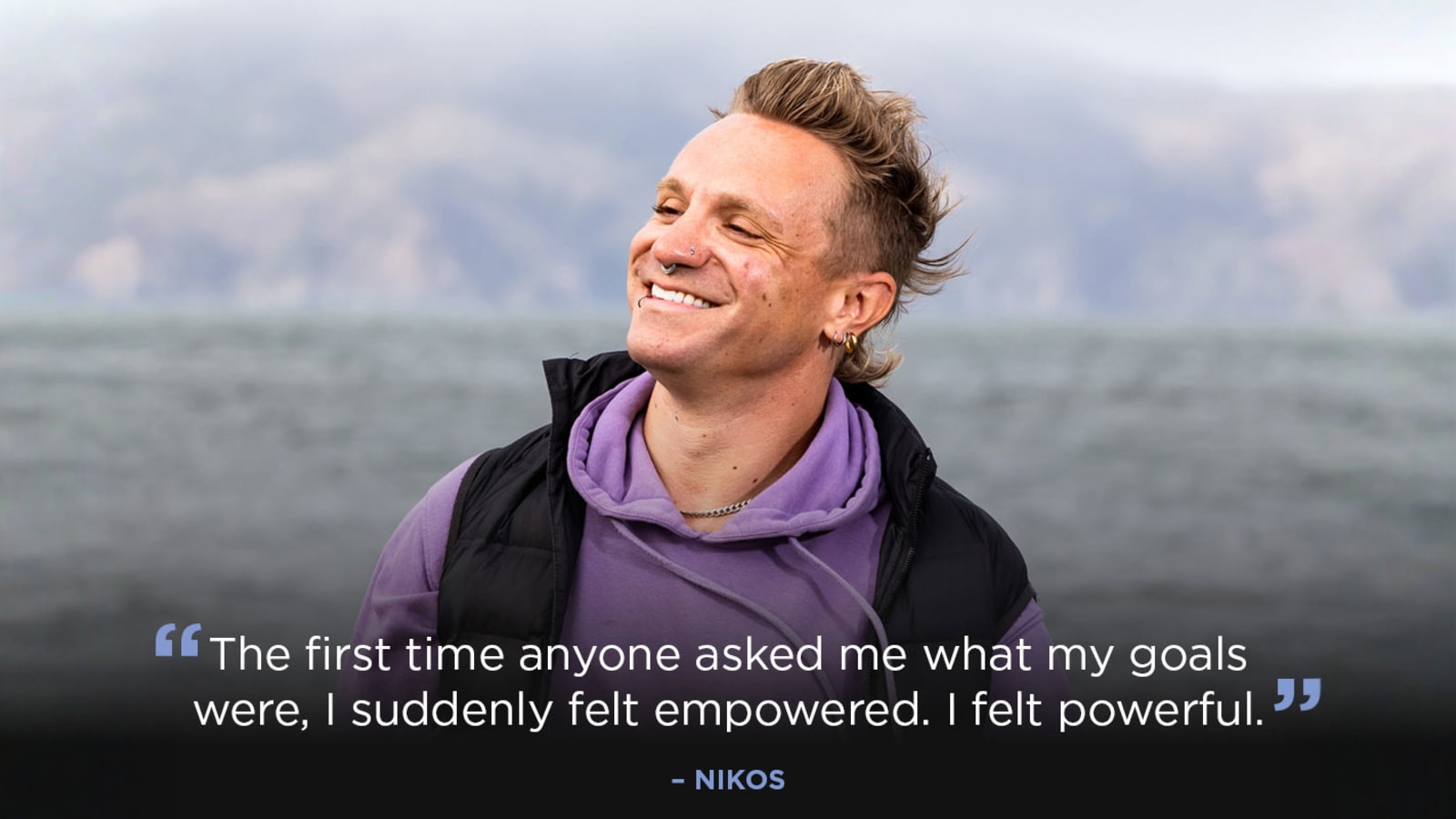
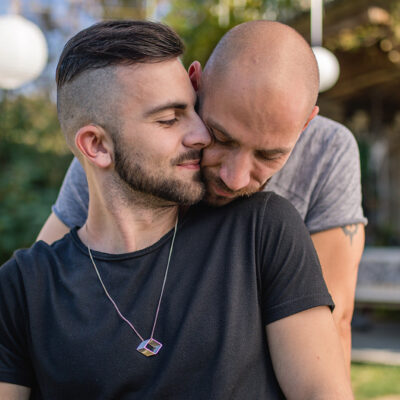
Nikos turned to substances as a way to cope but soon realized that life was spiraling beyond their control. When they found substance use counseling that asked, ‘What goals do you have for yourself?’ they were empowered to make positive changes.
Read Nikos' storyI didn’t use substances in a notable way until my freshman year of college, when I attended a Big Ten school. Athletic traditions, Greek life, and partying were central to the college experience, and I was all in. Although I drank a lot (we all drank a lot), it didn’t stand out to me as anything unhealthy or abnormal. Even when the Juniors and Seniors were taping 40-ounce bottles of oversized beer to our hands in theatre hazing rituals (we could not use our hands until we’d drunk all 80 ounces–“Edward 40-hands”—they called it), it all felt normal.
Four years of this binge-use behavior (“weekend warriors” we used to say) set up the stage for my addiction to thrive.
In a blur and a blip, everything peaked and spiraled in New York City, my post-college home after being signed with an acting agency. I quickly went from chasing a dream to running from demons, both real and imagined. Alone in a concrete jungle with my acting career faltering, I looked for love–and drugs–in all the wrong places. My American Dream became a New York nightmare. What was once thrilling and fun became dangerous and sad.
During those years, I didn’t realize the trauma I held from being gay in a straight man’s world. I came out at age 12 in Arkansas, after all. I was so busy being busy–excelling, networking, doing whatever I could to escape the homophobia and peer rejection–that I didn’t notice my spirit bleeding for so many years. Naturally, my subconscious fought to cauterize the wounds.
People often say that addicts use to numb their pain. But for me, I didn’t want to be numb. I was numb but wanted to feel.
Choosing the first Google-sponsored ad for a recovery community, I fled New York for rehab in the sunshine state.
Although the rehab facility helped me to examine and think clearly about my substance use, and what I wanted to change, there were times when I felt like a square peg in a round hole. For instance, being asked to introduce myself as an “alcoholic” to a room filled with AA attendees felt wrong. I can’t pretend that my relationship with alcohol has always been healthy, but it’s never been a substance that’s caused much harm in my life–as other substances have. Or being scolded by an “old timer” (AA speak for someone who has practiced the Twelve-Step recovery model of AA for many years) for drinking a kombucha (I didn’t realize the 0.5% alcohol content counted as “using”).
I’ve heard “a drug is a drug is a drug,” more times than I can count, but my relationship to cannabis is quite different than my relationship to alcohol, which is very different from my relationship to other substances. The all-or-nothing approach didn’t quite fit my needs, which is why I was fortunate to come across a harm reduction-based program in San Francisco that did.
I’ll never forget my first meeting, which was geared toward newcomers. One of the therapists asked, “What are your substance use goals?”
I’d never been asked that before. What were my goals?
Previously, I thought the choice was between nothing or chaos.
I quickly learned that there were many ways I might successfully address my use. Traditional full abstinence was one approach, and one which I’d had some success with, but there were also strategies around “targeted abstinence,” “managed use,” “harm reduction,” and more. All of these approaches were paired with non-judgemental, caring support from counselors and peers. Instead of feeling like I was a square peg trying to fit into a round hole, I felt welcomed, accommodated, and empowered to make informed choices about how best to address my use.
I went from powerless to powerful.
I’m in a very different place now. I’ve moved out of a dark, isolated place of guilt and shame. I’m resisting the narrative that my addiction was a “moral failure.” I’m standing strong through the judgment that comes when you bravely and vulnerably share your struggle with substances.
I’m sharing my story so that others know there are ways to change your use, reduce your harm, and improve your life even if you choose something other than complete abstinence. My experience tells me there’s no “one size fits all” when it comes to recovery.
I am so thankful for being invited into my own recovery journey, and being given safe spaces where I could be vulnerable and be wrong or vulnerable and be right–or simply be vulnerable–or, hell, simply just be. It was nothing short of revolutionary.
About this project
Story after story, we find that compassionate care is the throughline for meaningful change. Thank you to Apple Cronk, Nikos Pecoraro, Lia, and Tyrone Clifford for sharing their stories.
This project shares the real-life stories of four San Franciscans–who share their personal journeys with substance use, the care they’ve received, and the path they’ve taken to live their lives with purpose and intention.
This project was produced with funding from the San Francisco Department of Public Health.