



Advocates Call for $300,000 in City Funding to Support San Franciscans Aging with HIV

Press contact: Emily Land, media@sfaf.org
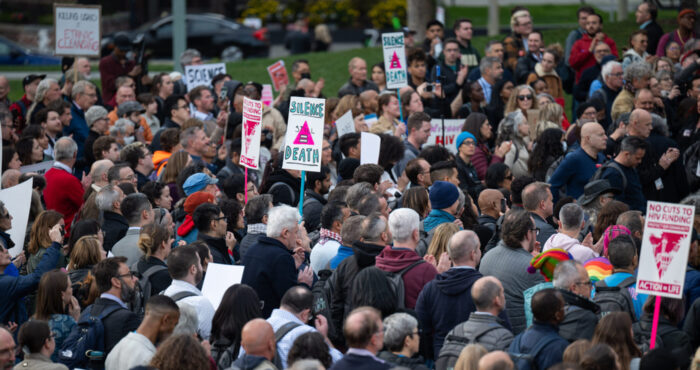
SAN FRANCISCO, September 18, 2025–On National HIV & Aging Awareness Day (September 18), a coalition of HIV groups including San Francisco AIDS Foundation (SFAF), the AIDS Legal Referral Panel (ALRP), and community activists are calling on the City of San Francisco to correct a longtime inequity in its aging services funding by investing $300,000 in programs that directly support older adults living with HIV.
For more than four decades, San Francisco has been a national leader in the response to HIV. Thanks to advances in treatment and care, 74% of people living with HIV in San Francisco are now over the age of 50. Yet despite this demographic shift, the City’s Department of Disability and Aging Services (DAS) has never designated funding specifically for services tailored to people aging with HIV despite growing community need.
“As a city, we stepped up during the darkest days of the epidemic and committed city resources, programs, and support to help people survive,” said Tyler TerMeer, PhD, CEO of San Francisco AIDS Foundation. “Now, the survivors are still here, and they deserve the resources to thrive as they grow older.”
People aging with HIV face a host of challenges distinct from other older adults. That includes higher rates of serious health conditions including diabetes, cardiovascular disease, PTSD and cancer; increased rates of social isolation and loneliness, intensified by the loss of social networks during the AIDS epidemic; and greater financial need.
“Older people living with HIV/AIDS desperately need dedicated, experienced, and free legal advocates in their corner,” said Matt Foreman, ALRP’s Executive Director. “It’s long past time for DAS to recognize the unique needs of this extremely vulnerable community.”
The coalition demands that the city finally fund the trusted and impactful programs providing social support, food assistance, outreach, service navigation, client advocacy, mental health care, and other services to San Franciscans aging with HIV.
“This is about equity, justice, and dignity for people who survived when so many others did not,” said Vince Crisostomo, director of aging services at SFAF and a long-time survivor of HIV. “We’re still here, and we need our city to be here for us.”
ALRP and San Francisco AIDS Foundation are established non-profit community organizations with decades-long commitments to serving people living with HIV.
ALRP provides legal services, support, and connection to people living with HIV and AIDS in the Bay Area. Nearly 40% of the organization’s clients are over age 60, bringing forward oftentimes complex legal issues associated with physical, mental health, and financial challenges faced by people aging with HIV. ALRP specializes in the comprehensive support needed to address issues related to private disability policies, Social Security, retirement income, eviction prevention, harassment by debt collectors, and more.
San Francisco AIDS Foundation advocates for effective policies, robust funding, and evidence-based programming to serve people living with HIV including long-term survivors; prevent new HIV infections; and, improve the health of all people living with or at risk for HIV. Additionally, SFAF provides free health, support, and community groups for tens of thousands of clients yearly–connecting people to HIV care, providing PrEP, and supporting the social-emotional and health needs of priority communities.
# # #