




PrEP Facts: What is PrEP?
PrEP, or pre-exposure prophylaxis, is a prescription medicine that you take before you come in contact with HIV that will prevent HIV infection.
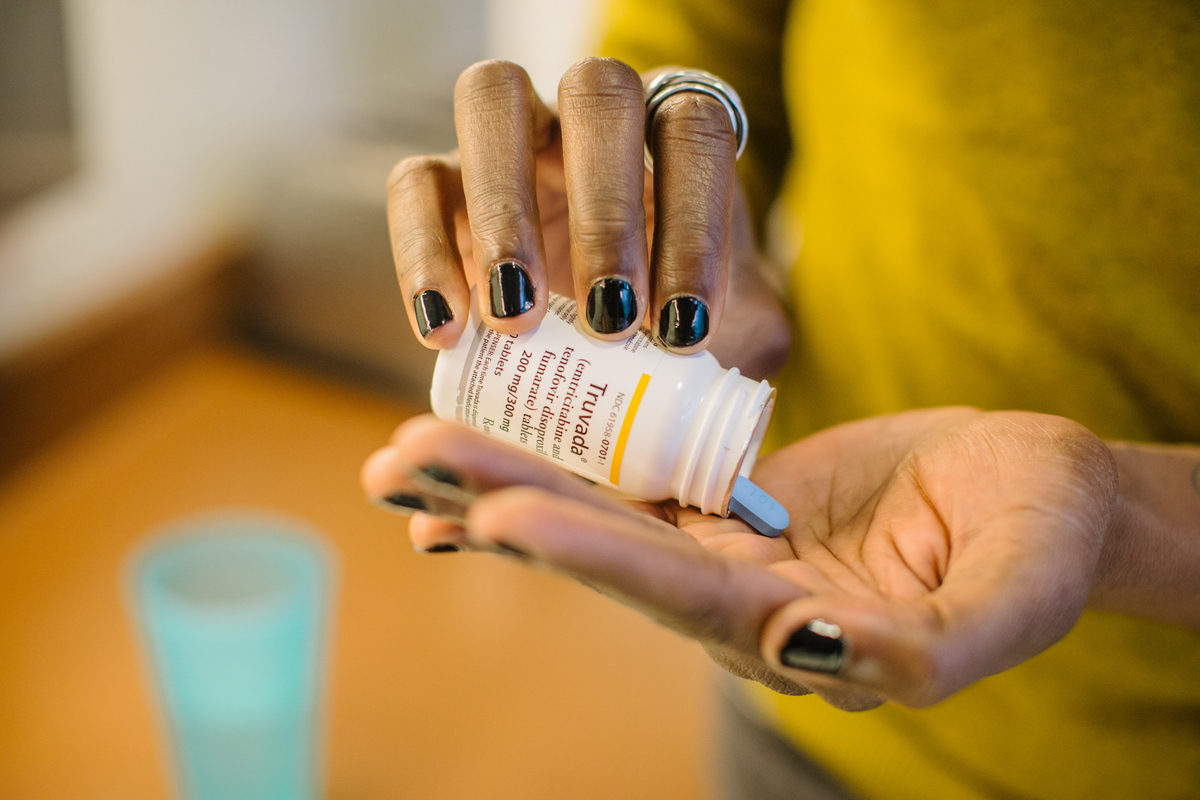

There are four different medications approved for PrEP:
There is also a generic version of Truvada available in the U.S.
Anyone can use PrEP to prevent HIV infection, and now most people have more than one PrEP option.
Truvada (tenofovir disoproxil fumarate + emtricitabine, or TDF/FTC) was the first medication approved for HIV PrEP. Now, a generic version of Truvada (TDF/FTC) is also available.
The information on this page applies to the brand name and generic versions of Truvada.
Truvada is more than 99% effective when used as prescribed. PrEP decreases the risk of HIV infection by about 99% for sex and at least 74% for sharing injection drug equipment. Using additional prevention methods, like condoms or U=U, can reduce this risk even more.
If taking daily oral Truvada for PrEP, you’ll be protected after the first seven days (if possibly exposed to HIV by anal sex); after 20 days (if possibly exposed to HIV by vaginal or front-hole sex); and after 20 days (if possibly exposed to HIV through sharing needles).
If taking PrEP 2-1-1, you’ll be protected after the double-dose (two pills) taken two to 24 hours before sex.
Truvada can be used by anyone, including gay & bisexual cisgender men, transgender women, transgender men, non-binary folks and people across the transgender spectrum, cisgender women, heterosexual people, and people who inject drugs.
Truvada is a pill. It can be used in two ways:
People taking daily Truvada take the medication orally (by mouth) every day usually at the same time of day. It’s safe to take a dose an hour or two earlier or later. Taking daily PrEP may be especially helpful if you’re having sex frequently (two or more times per week), if you’re not sure when you’ll have sex next, or if you may be at risk for HIV from injection drug use.
If you forget to take a dose of daily PrEP, take it as soon as possible if it’s within the first 12 hours. If it’s beyond that, wait and take the next dose as usual. There’s no need to double-dose.
PrEP 2-1-1 means taking Truvada around the times when you have sex, instead of every day. PrEP 2-1-1 is good for times when you can plan ahead for sex and/or are having sex less frequently. If you’re having sex once a week or less, then PrEP 2-1-1 may be easier to use (and less expensive) than daily PrEP. PrEP 2-1-1 is not currently recommended for people who have vaginal or front-hole sex, or people who share needles. Talk with your PrEP provider if you’re interested in using PrEP 2-1-1.
If you had sex while using PrEP 2-1-1 and missed a dose, contact your healthcare provider promptly for advice and next steps.
Find more info about PrEP 2-1-1 including how to take it on this info sheet.
The most common short-term symptoms for Truvada include diarrhea, nausea, vomiting, and loss of appetite. Mild side effects can be treated with over-the-counter medicines.
Possible long-term side effects of Truvada mostly relate to kidney health and slight weight loss. If your kidney lab levels decline, you may be able to stop Truvada and restart it without further problems, or you may be able to switch to Descovy. Kidney health side effects are rare.
Truvada can also slightly reduce bone strength. This is not associated with fractures or broken bones, but it may be a concern for people with osteoporosis or history of non-traumatic fractures. Bone density loss is not ongoing, so there is no continued reduction in bone density for people taking Truvada long-term.
Descovy (tenofovir alafenamide fumarate + emtricitabine, or TAF/FTC) is a medication that can be used for PrEP.
Descovy is a smaller pill than Truvada.
Descovy may have less of an impact on bone and kidney health for some people, which means it may be an alternative medication for people who have lower kidney function, osteoporosis, or otherwise may be worried about side effects.
Descovy cannot be used for PrEP 2-1-1.
Descovy is not recommended for people who may be exposed to HIV through injection drug use.
Descovy is more than 99% effective when used consistently every day as prescribed. You’ll be protected after the first seven days of dosing.
Descovy is approved for people who may be exposed to HIV through sex, with the exclusion of people who may be at risk from receptive vaginal or front hole sex. Descovy and has been tested with gay and bisexual cisgender men, transgender women, transgender men, and cisgender women.
Although not FDA-approved at the time, cisgender women who took Descovy in the Purpose 1 trial were less likely to acquire HIV. There is no clinical data to support use in people who may be exposed to HIV through injection drug use.
People taking Descovy take the medication orally (by mouth) every day, usually at the same time of day. It’s safe to take a dose an hour or two earlier or later.
If you forget to take a dose of daily PrEP, take it as soon as possible if it’s within the first 12 hours. If it’s beyond that, wait and take the next dose as usual. There’s no need to double-dose.
The most common short-term symptoms for Descovy include diarrhea, nausea, vomiting, and loss of appetite. Mild side effects can be treated with over-the-counter medicines.
Possible long-term side effects of Descovy may include weight gain and increases in cholesterol.
Apretude (cabotegravir) is the first long-acting injectable version of PrEP. Apretude may be a good choice for people who don’t like to take pills, and don’t mind getting a shot every couple of months.
Apretude for PrEP is more than 99% effective in preventing HIV infections. It was actually shown to be “superior” to daily Truvada in clinical trials.
Apretude is for people who have any type of sex (anal sex, front hole or vaginal sex, and other). That includes gay and bisexual men, transgender women, transgender men, non-binary people and people across the gender identity spectrum, heterosexuals, and cisgender women.
It is not approved for HIV prevention for people who may be exposed to HIV through injection drug use.
Apretude is delivered as one injection in the gluteal (butt) muscle by your PrEP provider. For the first two months, you’ll receive an injection once per month. After that, you’ll receive an injection once every two months.
There is an optional “lead-in” period with oral cabotegravir (1 pill per day for up to 28 days) to see how well you tolerate the medication before beginning injections.
Because the effectiveness of the medication goes down after two months, it’s important to remember to go back to your healthcare provider’s office for follow-up visits on time.
If you miss an injection, contact your healthcare provider to schedule your appointment as soon as you can to get back on schedule.
If you know in advance that you are going to miss your appointment to receive your PrEP injection, contact your healthcare provider. There may be options to take an oral version of PrEP in the interim if you happen to be traveling, or unavailable, during the time when you need to receive your next PrEP injection.
Pain or tenderness where you receive the injection is very common. You can take over-the-counter pain medication and apply a warm compress which may help relieve pain.
Apretude may be more expensive than oral PrEP. Talk with a benefits navigator about options for insurance or patient assistance programs if you have questions about affording PrEP.
Yeztugo (lenacapavir) is a long-acting injectable version of PrEP. Injections are given every six months.
Yeztugo is more than 99% effective in preventing HIV.
Yeztugo is for any person, including teens, weighing over 77 pounds, who may be exposed to HIV through sex (anal, vaginal, front hole, or other). It is not approved for people who may be exposed to HIV through injection drug use. Yeztugo can be used by people of all gender identities and sexual orientations.
People using Yeztugo receive injections and have PrEP appointments only twice per year.
Injections can be given under the skin on the abdomen, thigh, butt, or arm.
Day 1: two injections under the skin, plus two pills of lenacapavir.
Day 2: Two pills of lenacapavir.
Follow-up injections occur every six months (26 weeks).
Injections must be given every 26 weeks in order to prevent HIV. If a person is traveling or for another reason cannot receive their follow-up injections on time, there is an option to take oral tablets of lenacapavir once per week until the follow-up injections can be given.
Yeztugo injections can be painful. Most people experience pain, redness, swelling, and nodules after receiving the injections.
Icing the injection site for 10 minutes before can help a lot. Some injection sites (including the butt, thigh, or arm) may be less painful than the abdomen.
Headache and nausea are also common.
Most people have a nodule (a bump) appear under the skin where the medication is delivered. These are usually about 3 cm (the size of a grape) but can be larger. These nodules can be red, raised, and visible even through clothing, and can last for ~12 months.
Yeztugo can be more expensive than oral PrEP. Assistance programs are available for insured and uninsured people.
PrEP Facts content based on content authored by Alan McCord and Reilly O’Neal, updated August, 2025. Medical review by Hyman Scott, MD, MPH, medical director of SFAF.