




Millions in lost research funding threaten HIV advances
California receives the nation’s highest HIV/AIDS research funding per capita—not just because it’s big, but because it’s home to research powerhouses like UCLA, UCSD, USC, Stanford, and UCSF. These institutions have built their reputations by winning fiercely competitive federally-funded National Institute of Health (NIH) grants and leading the fight against HIV and AIDS since the earliest days of the epidemic.
“But right now, that progress is under serious threat because of funding cuts,” says Dr. Monica Gandhi, who leads UCSF’s Center for AIDS Research. Millions of dollars in NIH-funded research is on the line in California alone. The state received about $5 billion a year from the NIH in 2024; a significant portion of that supports HIV and AIDS initiatives. At one point, $23 million in NIH grants was cut from California institutions—including UCSF.
NIH-funded projects mentioning HIV and AIDs represented nearly 29% of the grants first terminated by the Trump Administration, and nearly a quarter of the grants mentioning trans health were cancelled. Dr. Gandhi notes that many of those NIH grants that were terminated earlier this year were restored after a recent federal court order. Despite this legal win, researchers are still being pressured to strip grant applications of words like “diversity” or “transgender,” which can force changes to the very scope and intent of their work.
Including words such as “diversity” or “transgender” aren’t just buzzwords; they’re critical for reaching the communities most affected by HIV. In the U.S., Black and Latino gay and bisexual men, transgender women, and people living in poverty continue to be disproportionately affected by HIV.
Research shows that culturally tailored interventions are far more likely to engage these groups, improve testing and treatment rates, and reduce stigma. For example, studies that use community-based outreach, employ peer navigators from the same background as participants, or develop prevention campaigns that reflect the lived experience of trans people or communities of color are all shown to be more effective at reducing new HIV diagnoses and improving outcomes.
For Black gay men like me, these cuts feel personal. Although Black people make up about 12% of the U.S. population, Black gay and bisexual men account for nearly 37% of new HIV diagnoses among gay and bisexual men. Every threatened grant, every missed study, every setback in research is another step backward into a world where stigma, neglect, and barriers to care grow. We’ve seen how systemic inequities make our communities more vulnerable—and how research tailored to our needs can save lives.
Back in 1996, it was NIH-funded scientists who cracked the code on HIV treatment, finding the drug combination that turned HIV from a death sentence into a chronic, manageable illness. That single breakthrough slashed AIDS deaths by nearly half in just one year—a drop so dramatic, the CDC called it a turning point in the epidemic. The progress we take for granted now is a direct result of the very research that’s under attack.
That was 1996. Today, researchers are up against a new wave of challenges. One recent example: a clinical trial, part of an NIH-funded grant that was abruptly terminated, set out to test a groundbreaking combination of long-acting HIV treatments from two rival drug companies. In a marketplace that rewards competition, there’s no reason these companies would collaborate—except that the NIH grant brought them to the same table in the interest of public health, making this kind of innovation possible. Without that funding, the trial—and the promise it holds for suppressing transmission and preventing drug resistance—never gets off the ground.
This isn’t isolated. Across California, large clinical trial networks in HIV research have been delayed or put on hold because of NIH funding issues. Trials exploring new long-acting therapies, studies on TB-HIV coinfection, and ambitious cure research programs are all facing setbacks. International collaborations—like those investigating how to better manage common comorbidities such as hypertension and diabetes in people living with HIV—are also stalled. These delays have real, immediate consequences: fewer breakthroughs, fewer new treatments, and more people at risk.
Not only must the NIH continue funding this work, but when grants mention “diversity” and “trans” these grants should also be allowed to serve the communities it intends to reach. When an HIV study can openly address the experiences of Black, Latino, or transgender people, it’s far more likely to design interventions that actually work, build trust, and close gaps in care. The ability to name these populations allows researchers to recruit participants who are most at risk, create culturally competent outreach, and generate data that leads to targeted, effective public health action. On the ground, this means more people of color and trans individuals get tested, treated, and supported, and the science has a fighting chance to chip away at stubborn disparities that generic, one-size-fits-all research can’t touch.
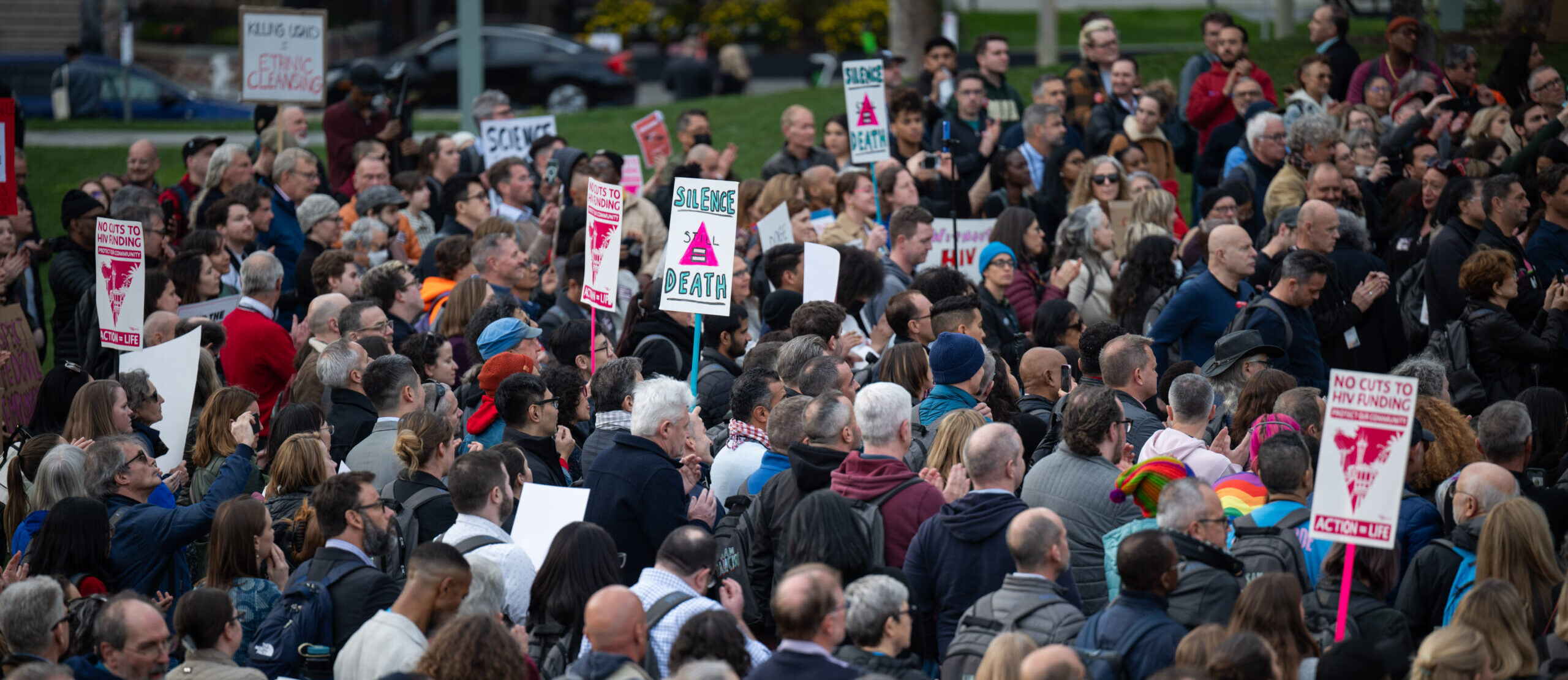
The freedom to use these words isn’t just about language—it’s about saving lives, and we must keep fighting for what’s right. Dr. Gandhi says it best: “We need to return to the activist strategies of ACT UP.” In the 1980s and ’90s, ACT UP’s unapologetic militancy forced the government and medical establishment to listen, saving countless lives in the process. Today, as research funding faces unprecedented threats, we need to remember that legacy—and the power of our personal stories—to keep pushing for health justice.