


San Francisco Once Led on Harm Reduction. Why Are We Moving Backward?
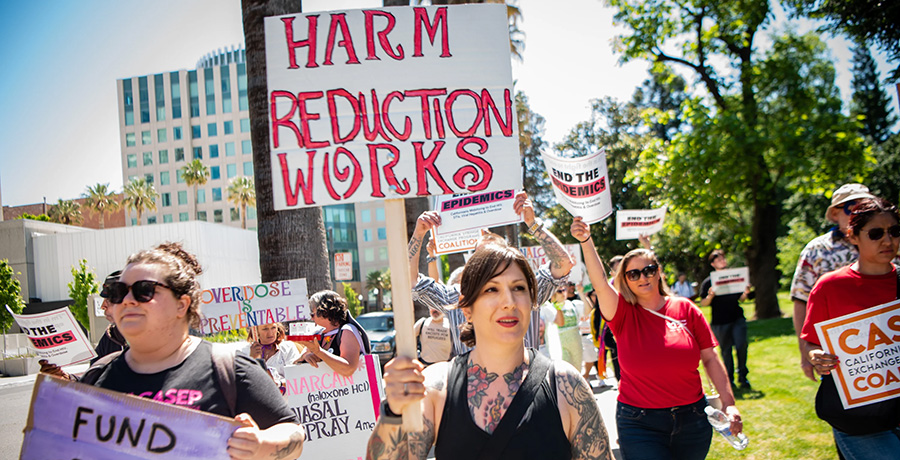
We are choosing punishment over public health.
In the middle of a deadly fentanyl epidemic, San Francisco is expanding the power to detain instead of expanding the power to heal.
That choice will define who we are.
The new RESET Center, approved by the Board of Supervisors and championed by City Hall, will allow police to detain people for public intoxication and hold them until they sober up. Supporters describe it as pragmatic — a response to visible disorder and open drug use.
But detention is not treatment. Coercion is not care.
More troubling still, this plan is advancing after the City Attorney warned of constitutional risks — particularly around due process and unlawful confinement. That warning was not procedural nitpicking. It was a reminder that even in moments of crisis, government power has limits.
And yet, the Board voted to proceed.
Because when legal guardrails are raised and we move forward anyway, we are not just debating policy. We are redefining the boundaries of state power over individual liberty.
What makes this moment especially painful is this: the very site now slated for the RESET Center was once intended to house San Francisco’s first sanctioned Safe Consumption Site — a public health intervention developed in partnership with the City. That facility would have provided direct pathways to treatment, coordination with jail health for those returning from incarceration, supervised use, health education, and overdose prevention — grounded in evidence and built on trust.
Instead, we pivoted from health to handcuffs.
For decades, San Francisco led the nation in harm reduction. At the height of the HIV epidemic, when fear and stigma dominated public discourse, this city chose science over punishment. We implemented syringe access. We distributed naloxone.
Those choices saved lives.
Across the country, in what is unmistakably Trump’s America, we are witnessing a resurgence of punishment-first governance. Civil liberties are treated as inconveniences. Due process is framed as weakness. Public health expertise is dismissed as ideology. “Law and order” once again substitutes for evidence.
We are hearing leaders argue that compassion has gone too far. When suffering is visible, the instinct becomes control.
San Francisco has long claimed to be the counterweight to that movement.
But when we proceed with detention-based responses despite explicit legal warnings — when we expand the authority to detain without guaranteeing meaningful voluntary care — we are redefining what public safety means in this city.
I understand the frustration that many San Franciscans feel when they witness the visible impacts of substance use in our neighborhoods. These are real concerns, and I don’t dismiss them. But I also know that what some label as “too much compassion” for people who use drugs is, in fact, a necessary and life-saving public health approach.
Compassion isn’t a finite resource. It’s not something we have to ration between housed and unhoused neighbors, or between people who use drugs and those who don’t. If our city is truly going to heal, we must recognize that everyone—everyone—deserves dignity, safety, and support. That includes those struggling with addiction, and those impacted by the fallout of a broken system that has failed to respond effectively.
The answer to the crisis on our streets is not less compassion—it’s more action. More housing. More treatment options that people actually want to use. More overdose prevention services that meet people where they are. We don’t move forward by criminalizing people for their pain or pushing them further into the shadows. We move forward by investing in solutions that treat addiction as the complex health issue it is, not a moral failing.
At San Francisco AIDS Foundation (SFAF), we believe that every resident of this city is worthy of care. That includes the person who walks into our 6th Street Center seeking support, and the person who walks past them wondering when the city will change. Compassion is not a liability—it’s the foundation of a public health system that works for all of us.
Let’s be bold enough to demand solutions rooted in evidence, not punishment. Let’s be brave enough to extend our compassion not just to those who are easy to love—but to those who need it most.
And if we fail to do that — if we allow frustration to eclipse principle — the consequences are not theoretical. They are constitutional.
Because when liberty can be suspended in the name of visibility, when detention replaces evidence, when the first responder to addiction is law enforcement instead of health care, we normalize a dangerous precedent.
And history shows us where that precedent lands first.
Black and Brown communities. Poor communities. People living with mental illness. People without housing. People without political power.
Today, fentanyl has changed the drug supply. It has made overdose faster, deadlier and less predictable. The answer to that reality is not arrest-adjacent interventions. The answer is deeper investment in overdose prevention, low-threshold medication-assisted treatment, housing, mental health services and supervised consumption.
SFAF operates Treatment Connections — linking people to detox, inpatient treatment, medication for opioid use disorder and medical care every single day. We distribute naloxone. We prevent overdoses. We walk with people through the long arc of stabilization.
We know what works because we have been doing this work and saving lives here in SF for decades.
If the RESET Center becomes a holding space without sustained voluntary treatment engagement, we will have traded one public health failure for another — and normalized something far more dangerous.
San Francisco built its reputation by insisting that even in moments of crisis, we do not abandon constitutional safeguards or human dignity.
We cannot detain our way out of a fentanyl crisis.
We must not criminalize our way out of visible poverty.
Saving lives is not radical. It is responsible.
San Francisco knows how to lead. The question now is whether we will.