
It’s hard to overstate how challenging the past two years have been for our communities. People affected by HIV, trans folks, people who use drugs, immigrants, and other marginalized groups have been buffeted by harmful policy after harmful policy—not only from the Trump administration, but also from state and local leaders who have replicated, rather than resisted, federal attacks on our most vulnerable community members.
On the bright side, HIV advocates have successfully fought back against many of these attacks. We’ve preserved most federal HIV funding, averted the majority of proposed local HIV cuts, and even secured an additional $500 million in state funds to address the syndemic of HIV, viral hepatitis, STIs, and overdose.
One reason that advocates for people affected by HIV have been able to hold the line so firmly is that San Franciscans have shown up election after election to make clear to our leaders that HIV and health justice are priorities for our city. After all, to not show up would be to choose silence, and we in the HIV movement know all too well that Silence = Death. So this November, use your voice. Use your vote.
So this November, use your voice. Use your vote.
To make voting as easy as possible, we’ve compiled information below about how to register. Closer to the election, watch this space for information about how to cast your ballot, as well as info on ballot measures that SFAF is endorsing or opposing.
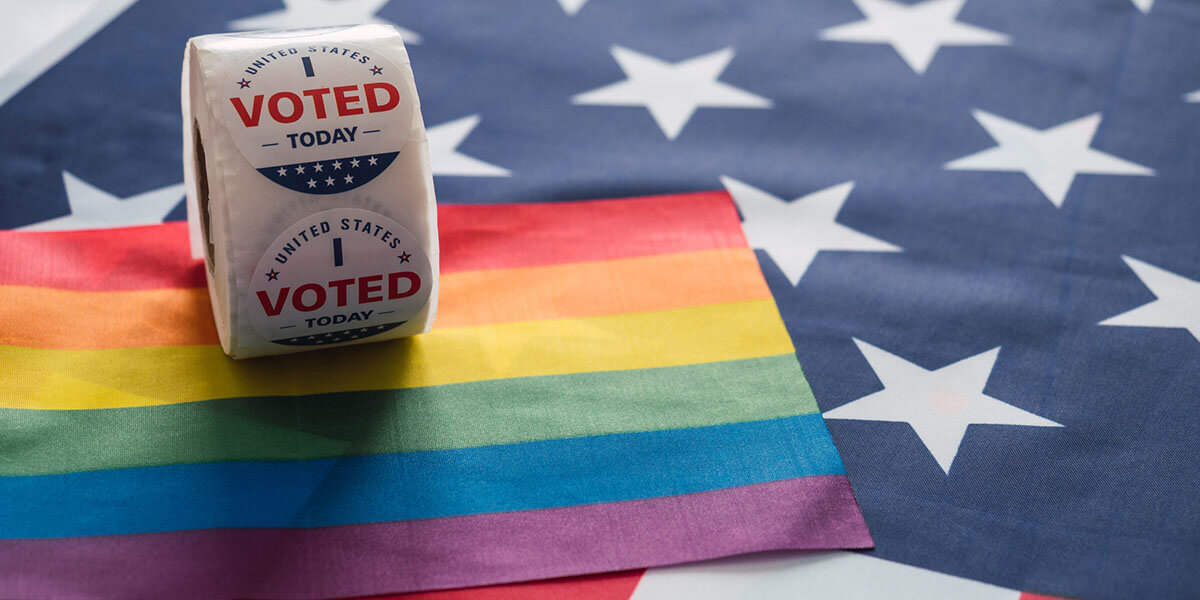
In order to vote, you first have to register with the State of California’s Elections Division. If you want to vote in the November 3 election, the deadline to register is October 19. After that, you can still register, but you have to do it in person at your county elections office, polling place, or vote center. You can find one of these locations on the Elections Division’s website.
To be eligible to register, you have to be:
- A United States citizen. (If you aren’t a citizen, you can still vote in San Francisco school-board elections. For more information, visit the City of San Francisco’s website.)
- A resident of California. This just means that you are staying in the state and intend to remain here. (You can register even if you’re unhoused, using the place you’re staying—e.g., a park or a nearby intersection—as your residential address. For more information, view this fact sheet.)
- 18 years old or older on the next election day. (If you’re 16 or 17, you can “pre-register” to vote; then you’ll be automatically registered on your 18th birthday.)
- Not currently serving a prison term for a felony. You can still register to vote if you have a past felony or a misdemeanor. (Here’s more info on voting rights for people with criminal convictions.)
- Not currently found mentally “incompetent” to vote by a court. (Here’s more info on voting rights for people under a conservatorship.)
The easiest way to register is online. To do this, you’ll need the following info:
- Your California driver-license or identification-card number. If you don’t have either, you can still use the online registration form, but you’ll have to do an extra step by mail.
- The last four digits of your Social Security number
- Your date of birth
The online voter registration form is available in Spanish, Chinese, and several other languages.
If you’re already registered, remember that after you move or legally change your name, you need to re-register.
If you’re registered to vote, you should receive your ballot by mail not long after October 5. If it’s a while after Oct. 5 and you still haven’t gotten a ballot, reach out to your county elections office.
Once you have your ballot, you can simply fill it out and mail it back to your county elections office using the pre-addressed, postage-paid envelope that comes with it. (When you sign the envelope, try to match your signature to the one on your California driver’s license or state ID, or the one you gave when you registered to vote.)
Your ballot has to be postmarked on or before November 3, Election Day. To make sure that happens, California election officials recommend mailing it at least seven days before the election.
You also have the option of returning your ballot, or voting with a new ballot, in person. You can do this at either an official drop box, a polling place, a vote center, or your county elections office. You’ve got until 8 p.m. on Election Day (Nov. 3) to vote in person.
In San Francisco, there are 37 official drop boxes located throughout the city and one vote center, at City Hall. On Election Day (Nov. 3), there will be hundreds of polling places operating across SF; you can look up yours on the City’s website.
For information about in-person voting in other counties, visit the county’s elections office website.
Lastly, know that assistance with voting is available for people with disabilities and people who speak a language other than English.
Happy voting!