August 31, 2026, SAN FRANCISCO, CA — On International Overdose Awareness Day, the San Francisco Safer Inside and Treatment on Demand Coalitions join communities across the country and around the world in remembering people we have died from overdose, standing with those who have survived, and calling for a renewed commitment to the individuals at the center of this crisis, people who use drugs.
After years of overdose deaths, we are not facing a lack of awareness. We know that people who use drugs are dying, we know the risks created by an unpredictable and unregulated drug supply, and we know that evidence-based interventions can save lives. What is needed now is the political will to make those interventions available, accessible, and adequately funded.
People who use drugs deserve healthcare that is low-barrier, voluntary, evidence-based, and grounded in dignity and respect. That means meeting people where they are with the services and tools that support their health and safety, including harm reduction services, street medicine, peer-led outreach, contingency management, and a full spectrum of medications, treatment, and recovery options.
San Francisco has made progress in reducing overdose deaths, but the crisis remains devastating and its impacts are not shared equally. Black San Franciscans continue to experience a disproportionate share of overdose deaths, while older adults are increasingly affected. These disparities demand more targeted, accessible, culturally responsive, and linguistically appropriate care.
“Everyone should have access to the health services that they need,” said Anna Berg, Clinical Program Director of the Harm Reduction Therapy Center. “If someone is interested in making a change, we need to make it as easy as possible for them to get care. If they are not ready, we still need to keep them connected to a system they can trust.”
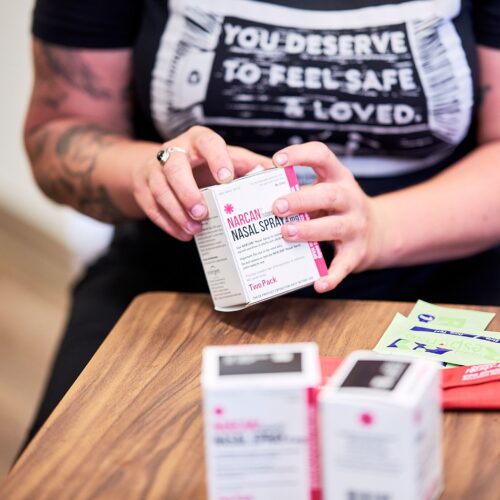
The unregulated drug supply makes access to low-barrier care and accurate public health information all the more urgent. Polysubstance use is common, and fentanyl and its analogs remain central to San Francisco’s overdose crisis as the local supply continues to change. People should not be left to navigate that supply without factual, nonjudgmental information about the substances they may encounter and the risks associated with consuming them. Drug checking, naloxone, safer use supplies, and other harm reduction services give people tools to make more informed decisions and improve health outcomes.
In accordance with San Francisco’s Treatment on Demand law, access to treatment must remain a central part of the response. When someone asks for treatment, the healthcare system should be ready to respond. That requires sufficient capacity and a continuum of services. It also means recognizing that not everyone who uses drugs needs treatment, and that people should be able to access healthcare and housing regardless of whether they are seeking abstinence.
People who use drugs continue to face barriers to care. Threats to healthcare access, combined with policies that prioritize criminalization and interdiction, can push people further from the providers and trusted relationships that help keep them alive. Restricting harm reduction or reducing services only eliminates opportunities for people to build relationships and survive an overdose.
“Care, connection, evidence, and trust work,” said Laura Guzman, Executive Director of the National Harm Reduction Coalition. “We should be expanding the tools that help people stay alive and get well. People should not have to prove that they are ready for recovery as a prerequisite for care and housing.”
People who lived experience must also have a meaningful role in shaping the response. Peer-led outreach can build trust in ways that clinical expertise alone cannot replicate. Removing peers from crisis response and narrowing the range of community-based services moves San Francisco away from a multidisciplinary, health-centered approach at a time when people need more pathways to care.
International Overdose Awareness Day is a day to remember those who have died. But remembrance without action is not enough. We cannot spend another year acknowledging overdose deaths while allowing effective interventions to remain limited by stigma, bureaucracy, underinvestment, or political opposition. The Safer Inside Coalition and Treatment on Demand Coalition call on community leaders to:
- Expand low-barrier, evidence-based healthcare for people who use drugs, including medications for opioid use disorder and other effective treatments;
- Protect and invest in harm reduction, including voluntary sobering and drop-in centers, syringe services programs, overdose prevention centers, naloxone distribution, drug checking, safer use supplies, and peer-led outreach;
- Maintain sufficient treatment capacity to fulfill the promise of Treatment on Demand and ensure that people can access palatable, dignified care when they ask for it;
- Ensure linguistic access and disability rights are integral to services, including meaningful access to interpretation, accessible communication, and appropriate accommodations;
- Provide fact-based, nonjudgmental drug education and public health messaging with accurate information about substances, risk, safer use, and available health and treatment resources;
- Reject policies that restrict access to healthcare, harm reduction services, or medications;
- Prioritize public health approaches to public health issues over criminalization and interdiction, and invest in voluntary, community-based approaches that build trust and connection;
- Center people with lived experience in the design, delivery, and evaluation of overdose prevention, treatment, and crisis-response services.
“We honor the people we have lost by refusing to accept overdose as inevitable,” said Laura Thomas, Senior Director of HIV & Harm Reduction Policy with San Francisco AIDS Foundation. “We can build a healthcare system that meets people where they are, respects their autonomy, gives them the information and tools to stay alive, and makes treatment available when they want it.”
About the San Francisco Safer Inside Coalition
Founded in 2015, Safer Inside is a community-based coalition of organizations, researchers, people who use drugs, public health experts, frontline workers, activists and community members working to make overdose prevention centers a reality in San Francisco, the Bay Area, and California.
About the San Francisco Treatment on Demand Coalition
Treatment on Demand Coalition is a partnership of community-based organizations, treatment providers, advocates, and stakeholders committed to ensuring that all San Franciscans have access to timely, equitable, and effective prevention, harm reduction, treatment, and recovery services.
# # #