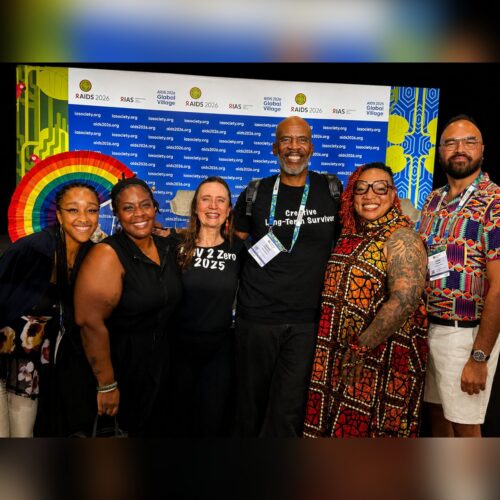
Last month, four staff members represented SFAF on the world stage at the 26th International AIDS Conference, AIDS2026, in Rio de Janeiro. Team members played leading roles on conference organizing committees, shared their expertise in HIV and policy work in sessions and in networking zones, and listened and learned from community partners and researchers from places around the globe.
The theme of the conference this year was “Rethink, Rebuild, Rise” which centered around deficits in access to care and prevention, and the struggle to continue work despite global funding collapses, the team returned invigorated and inspired from the trip.
“This is the first time the conference was held in South America, and there was overwhelming representation from the region,” said Brian Ragas, director of Black Health. “We heard from Brazilians, Caribbeans, and so many other people from Latin America. It was great to have people of those identities at the conference and also represented in the Global Village.”
Ragas was on the organizing committee for the Global Village, a space for community organizations, advocates, and people living with and affected by HIV from around the world. This year, the team presented a show, “LHIV to Zero,” on the main stage in the Global Village in collaboration with the San Francisco LGBT Center. The show featured performance, music, dance and personal stories related to HIV. He also presented in two networking zones for Black gay men and also for people from the Black diaspora.
“A lot of folks in the global South–and everywhere–are struggling,” he said. “We brought folks together to bring a light to everyone’s experiences right now.”
In recent years, new prevention and treatment advances have created much excitement for the HIV response.
“But innovation only saves lives, when people can actually benefit from it. It doesn’t matter how groundbreaking something is if the communities who need it cannot access it, afford it, or realistically incorporate it into their lives.”
Ebony Gordon, program specialist, community engagement
This was a point Gordon paid close attention to at the conference.
“A lot of the conference focused on implementation and access. We heard a lot of discussion about funding for the HIV response collapsing in the U.S., and the global impact of those changes. In order for people to be able to access things like new prevention options, or HIV treatment, those options have to be on the table. And in a lot of places, they aren’t.”
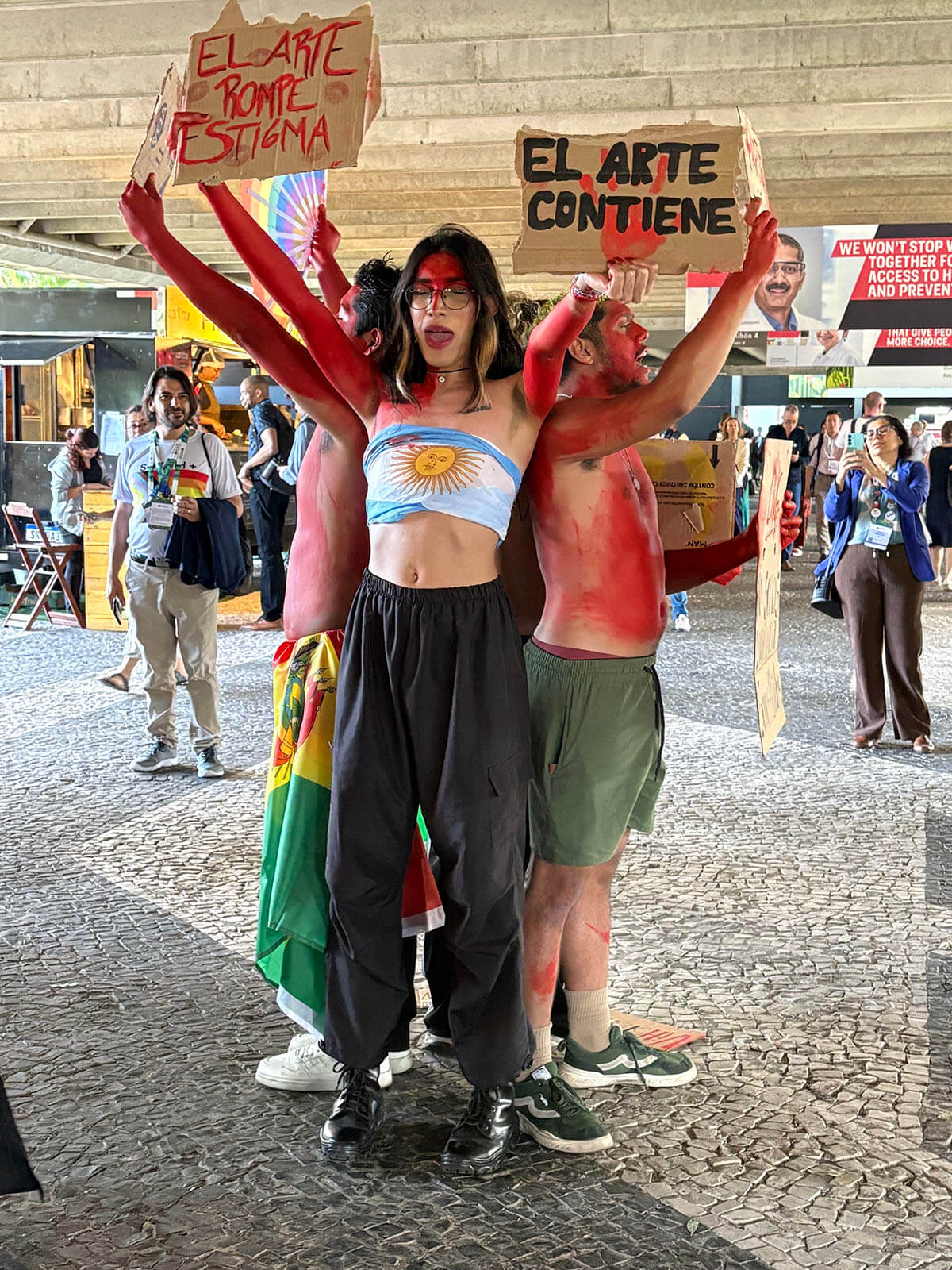
Gordon was inspired by the protests that took place during the conference, which focused on access and affordability.
“They interrupted the opening plenary. They were in the Global Village. It was exciting to see people getting fired up. Sometimes the protests were in other languages, so we didn’t know exactly what was being said, but their message was getting across to everyone!”
Nearly 50 queer and trans people from Rio and the surrounding areas were able to attend the Global Village thanks to support from the HOPE Collaboratory (which Gordon leads community engagement efforts for).
The day’s events for attendees, which included transportation, breakfast and lunch, and a session on how art can convey messages about stigma and access, was held entirely in Portuguese.
“It was really, really special to see,” said Gordon. “A lot of these folks were sex workers. Or queer young people. Or living with HIV. This was an amazing opportunity for them to be part of a larger HIV and AIDS community.”
This was Asia Stephens’ first time attending an International AIDS Conference. They were inspired by the representation from trans communities, and in particular, the intentional ways that trans and gender non-conforming communities were included in panel discussions and other conference spaces.
“One of the biggest highlights was getting to know other community members around the world,” said Stephens. “And even though funding is being cut for many organizations, a major goal for trans folks around the world is to make sure we are connected, know of each others’ organizations, and stay connected. I saw at least 20 posters presented at the conference on trans-related issues and research, and there was representation about grassroots organizing that folks are doing in their communities. It was refreshing to see.”
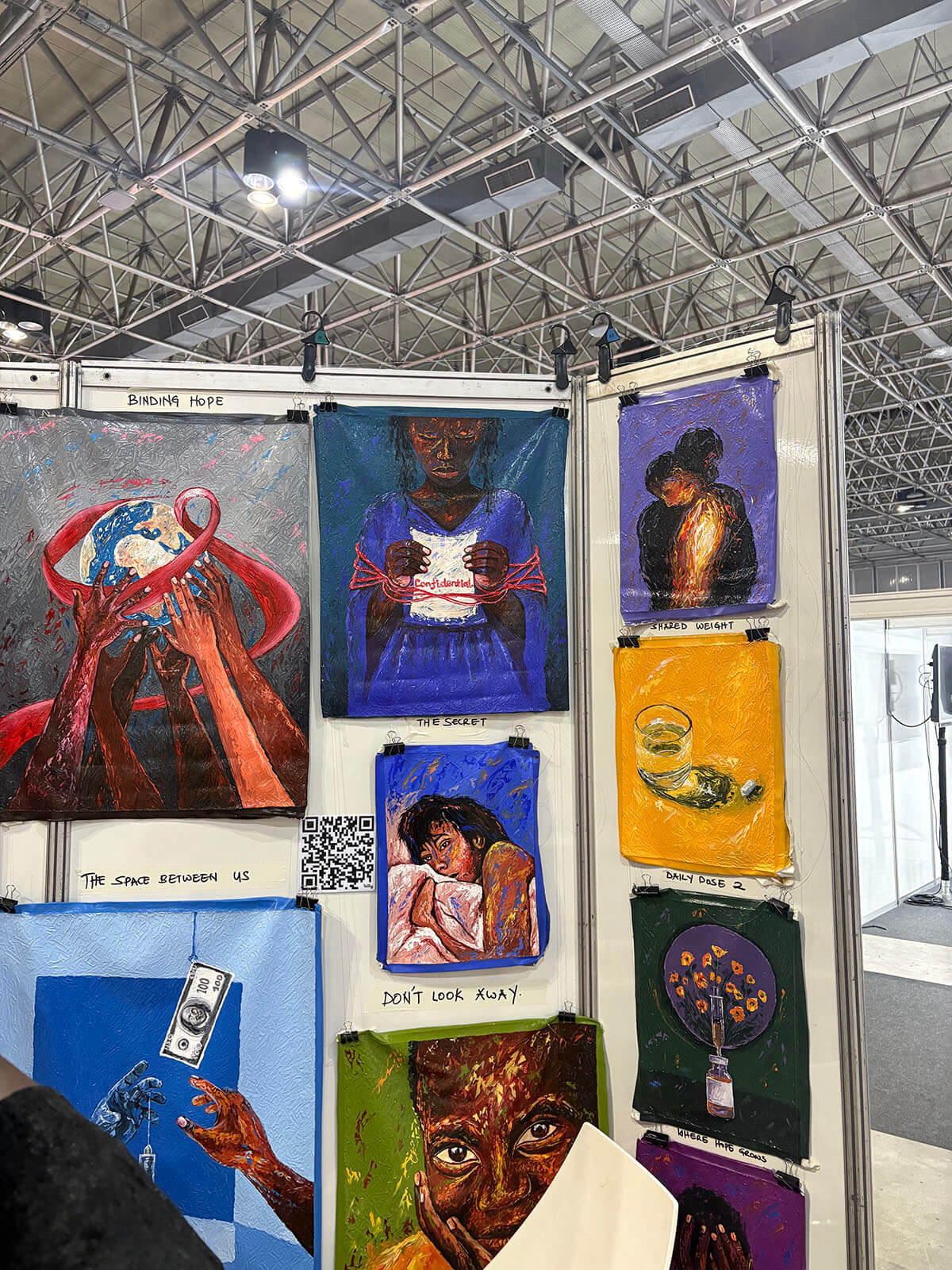
Art took center stage at the conference, as part of displays created by and for HIV communities. Stephens described statues that decorated conference spaces, paintings hanging from ceilings, condom art, photographs, and clothing displays.
Gordon, who leads a group for Black women at SFAF, said she was happy to see so many sessions focusing on women and femmes. One theme that was discussed at the conference was “bringing sexy back” to HIV and sexual health conversations.
“Sexual health is often framed around risk, disease prevention, and what not to do, but if we are going to have meaningful conversations about sexual health, we also have to talk about pleasure and its importance in sexual health and overall wellness,” said Gordon.
A take-away from the conference for attendees was the push for integration of HIV into generalized health and whole-person care.
“This is something we do in San Francisco already,” said Ragas, “but there is a push for this globally–for HIV to be integrated into whole-person care. Because of financial constraints that HIV-specific programs face, and because it’s ultimately better for the people we serve.”