


Home   Contact   Careers   En español   

Affordable Drug Access for Developing Countries

Over the past few years, the world has turned its attention to people with HIV/AIDS in poor countries. As effective new anti-HIV medications began to improve the health and prolong the lives of people with HIV/AIDS in wealthy countries, treatment advocates became increasingly concerned that these life-saving drugs were not available to everyone in the world who could benefit from them. According to the Joint United Nations Programme on AIDS (UNAIDS), an estimated 36 million people in the world have HIV or AIDS, over 90% of whom live in developing countries. Of these, it is estimated that only about 2% have access to anti-HIV drugs.

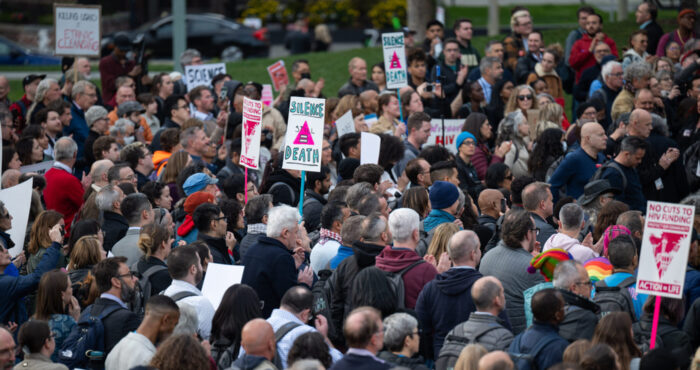
Drug access issues were a major theme at the 12th World AIDS Conference in Geneva, Switzerland, in 1998, and even more so at the XIII International AIDS Conference in Durban, South Africa, in July 2000 -- the first time the meeting was held in a developing country. In recent years, large protests of world trade agreements and financial institutions also have called attention to previously obscure entities and issues, prompting a new wave of activists to look at global poverty and unequal access to health care.

In early 1999 members of several organizations -- including ACT UP, the Consumer Project on Technology (CPT), South Africa's Treatment Action Campaign (TAC), and Médecins sans Frontières/Doctors without Borders (MSF) -- formed the Health Global Access Project (HealthGAP) Coalition, which has spearheaded the fight for affordable HIV/AIDS treatment. In April of that year, activists kicked off a global campaign for accessible medications with a demonstration in Washington, DC. Unlike the ACT UP protests of the late 1980s and early 1990s, this effort brought together a broad coalition of groups, including some -- such as the textile workers union and Rainforest Action Network -- that were not associated with AIDS, health or gay issues; this would prove to be a sign of things to come.

South Africa has been pivotal in the quest for access to anti-HIV drugs. In 1997 the country passed legislation allowing it to obtain generic (equivalent nonbrand) versions of patented drugs under two international trade provisions known as compulsory licensing and parallel importing. In 1998 a group of pharmaceutical companies sued to overturn the law. After three years -- and a great deal of negative publicity -- the companies withdrew the lawsuit in April 2001. In June 2001 the U.S. withdrew a complaint it had filed with the World Trade Organization (WTO) concerning a Brazilian law allowing generic drug production. But the matter of drug patents and affordable treatment access is far from resolved.

The World Trade Organization and TRIPS

Compulsory licensing allows a country to grant a local manufacturer a license to make a product that is patented by another company. Article 31 of the WTO's Trade-Related Aspects of Intellectual Property Rights (TRIPS) agreement allows for compulsory licensing with the payment of a royalty fee to the patent holder. Countries are supposed to seek authorization from the patent holder before granting a license, but this requirement may be waived in cases of "national emergency or other circumstances of extreme urgency."

Parallel importing allows a government to "shop around" and purchase a product from the cheapest available global source, which may not be the patent-holder. TRIPS neither prohibits nor explicitly permits parallel importing.

TRIPS, which was implemented on January 1, 1995, established 20-year patents on pharmaceutical products. Before TRIPS, there were no uniform international patent protection rules, and many countries excluded drugs from patent protection. In order to join the WTO, countries had to agree to abide by TRIPS. Developing countries were given until 2000 to comply, and the least developed countries (LDCs) were given until 2006. LDCs are the world's poorest and structurally weakest nations. The United Nations (UN) currently lists about 50 LDCs, many of which are located in sub-Saharan Africa.

Using TRIPS, governments can produce -- or contract with other companies to produce -- generic versions of patented products. Generic drugs contain the same active ingredients as their brand-name equivalents, but are cheaper because they do not include the costs (research, development, marketing, advertising, etc.) or profits associated with patented drugs. Generic versions of anti-HIV drugs produced in developing countries typically cost 5-25% of the market price of the brand-name equivalent. MSF estimates that the cost of highly active antiretroviral therapy (HAART) in the U.S. is $10,000-$15,000 per person per year. Treatment using generic equivalents costs about $500-$1,000 per person per year, which may be pushed lower with the use of new, simpler regimens using combination pills. Indian generic drug manufacturer Cipla has offered a triple combination regimen (d4T/3TC/nevirapine) to certain nongovernmental organizations (NGOs) and LDC governments for $350 per person per year.

Although the U.S. signed the TRIPS agreement, it generally does not look favorably on compulsory licensing and parallel importing. American intellectual property laws are more restrictive than those of the WTO, and the U.S. has insisted -- sometimes under the threat of trade sanctions -- that countries refrain from copying patented products.

International Pressure

In February 1998 a number of drug companies under the aegis of the Pharmaceutical Manufacturers Association of South Africa (PMA-SA) filed suit against an amendment to South Africa's Medicines and Related Substances Control Act of 1965. The amendment allowed the government to use compulsory licensing and parallel importing to obtain life-saving medications. An injunction was granted, and the law never took effect. In September 1999 PMA-SA suspended the lawsuit after South African health minister Manto Tshabalala-Msimang, M.D., agreed to review the law, but the suit was later reinstated.

The U.S. government pressured South Africa not to make use of compulsory licensing and parallel importing. In early 1999 activists obtained what they called "the smoking gun memo," a State Department memo to Congress describing actions taken by the administration in support of pharmaceutical companies, including the addition of South Africa to the "watch list" (a precursor to trade sanctions). As co-chair of the U.S./South African Bi-National Commission, Vice President Al Gore played a key role in negotiating U.S. trade relations with South Africa. Gore had made enforcement of drug patents a focus of an August 1998 meeting with South African president Thabo Mbeki. AIDS activists responded by targeting Gore during his presidential primary campaign.

Hounding Gore

Activists hounded Gore throughout the summer of 1999, from his kickoff in Tennessee through his first stops in New Hampshire and beyond. Many asserted that campaign contributions from the pharmaceutical industry influenced Gore's actions in relation to South Africa. In the words of columnist Arianna Huffington, the drug patent issue demonstrated "how our campaign finance system allows powerful special interests to secretly dictate policy, even when the lives of millions are at stake." In August, protesters from a group calling itself AIDS Drugs for Africa locked down the vice president's office building; firefighters had to be called to remove the activists' chains. Other demonstrations took place in New York City, Philadelphia, Oakland, San Francisco, and Johannesburg. Gore and his staff attempted to defuse the controversy, saying that activists had distorted his record. In July he submitted a letter to the Congressional Black Caucus stating, "I support South Africa's effort to provide AIDS drugs at reduced prices through compulsory licensing and parallel importing, so long as they are carried out in a way that is consistent with international agreements."

On September 17 the U.S. said it would not act to prevent South Africa from manufacturing or importing life-saving medications in accordance with TRIPS. In December the country was finally removed from the "watch list." But activists remained concerned that the U.S. was not doing enough to facilitate access to affordable drugs, and demanded that the administration refrain from sanctioning any developing country attempting to provide generic drugs. ACT UP/Philadelphia member John Bell said, "Saving lives in Thailand, Brazil, and India is just as vital as saving lives in South Africa."

Trouble in Thailand

Thailand also ran afoul of the U.S. on the issue of drug patents. In the pre-WTO era, Thailand had a Pharmaceutical Patent Review Board to study the local production of patented drugs, but the board was abolished in 1998 in the wake of threatened U.S. trade sanctions. In November 1999 Thailand's Government Pharmaceutical Organization (GPO) asked the country to consider compulsory licensing so that it could locally manufacture generic ddI. In December Thai AIDS activists demanding affordable drugs set up camp outside the Thai Health Ministry. The protest ended on Christmas Eve after health minister Korn Dabbaransi agreed to determine whether Thailand would be safe from legal action if it licensed the drug.

In January 2000, Dabbaransi announced that the country would produce a cheaper, powdered version of ddI using a process and ingredients different from those of the patented form. But activists were not satisfied, saying that compulsory licensing would allow for lower prices than the powdered form. Over 100 people protested outside the U.S. embassy in Bangkok, asking President Bill Clinton not to impose sanctions against the Thai government. On January 27 the U.S. sent a letter to Dabbaransi stating, "If the Thai government determines that issuing a compulsory license is required to address its health-care crisis, the U.S. will raise no objection."

U.S. Policy Changes

The battle for affordable drug access was fought on many fronts. In October 1999, nearly 500 protesters blocked traffic outside the office of U.S. trade representative (USTR) Charlene Barshefsky. In late November, ACT UP members from Philadelphia and New York held a sit-in inside Barshefsky's office, while five climbers chained themselves to her office balcony with a banner demanding "Essential Medications for All Nations." The action served as a send-off for Barshefsky, who would soon be on her way to Seattle to meet with fellow international trade negotiators.

On the eve of World AIDS Day, December 1, 1999, activists around the world held demonstrations in response to TAC's call for a "global day of shame" against opposition to generic drugs. These actions coincided with a meeting of the WTO to launch a new round of trade negotiations. An estimated 50,000 activists -- concerned with a wide range of issues from the environment to labor rights to trade issues to genetically modified food -- gathered in Seattle to oppose the organization and its policies, and the streets erupted in one of the largest and most militant protests seen in the U.S. since the 1960s. Police responded with tear gas and rubber bullets, the National Guard was called in, and the "Battle of Seattle" brought the WTO and the issue of international trade onto the nation's radar screen.

Addressing the WTO delegates on December 1, Clinton promised that the U.S. would stop pressuring poor countries attempting to access cheaper anti-HIV drugs. "Intellectual property protections are very important to a modern economy," he said, "but where the HIV and AIDS epidemics are involved . . . the U.S. will henceforth implement its health-care and trade policies in a manner that ensures people in the poorest countries won't have to go without medicine they so desperately need." The administration said it would develop a "flexible" method for deciding on a case-by-case basis whether to allow countries to access generic medications.

The pharmaceutical industry was not pleased with the new policy. Mark Grayson of the Pharmaceutical Research and Manufacturers of America (PhRMA) said, "We don't believe parallel importing is proper. A lot of parallel imports come from places like India, and half the time [the drugs have] no active ingredients. It's killing patients, causing drug resistance, and giving false hope."

Even as they were targeting Gore, AIDS activists had also spent the year opposing proposed legislation intended to promote development in Africa. The Africa Growth and Opportunities Act included sanctions against African countries that produce or import generic drugs. Senator Dianne Feinstein (D-CA) added an amendment allowing compulsory licensing, but it was stripped from the House-Senate compromise version of the legislation passed in May 2000. AIDS treatment advocates urged the administration to accomplish the same goal by means of an executive order. On May 11 Clinton issued an order making his December promise official policy, affirming that the U.S. "shall not seek, through negotiation or otherwise, the revocation or revision of any intellectual property law or policy" of sub-Saharan African countries that promote "access to HIV/AIDS pharmaceuticals or medical technologies for affected populations." In February 2001 newly inaugurated president George W. Bush agreed to retain his predecessor's executive order.

Price Cuts and Generic Offers

As the drug access issue received increasing international attention, pharmaceutical companies took steps to make AIDS medications more affordable to poor countries, and generic drug makers stepped in with reduced-price offers. At times, patent-holders and generic producers appeared to be competing with each other to offer the best deal.

In May 2000, five major pharmaceutical companies -- Boehringer Ingelheim, Bristol-Myers Squibb, Glaxo Wellcome, Merck & Co., and Roche -- agreed to reduce prices on several anti-HIV drugs by up to 80% for LDCs. The earliest price cuts were typically negotiated on a country-by-country and drug-by-drug basis.

Most poor countries, however, did not enter these negotiations. Although company offers were in some cases as low as available generic drug prices, LDC governments and activists continued to push for compulsory licensing, preferring a mechanism that was under local control and not reliant on corporate largesse. South African Health Ministry Director General Ayanda Ntsaluba said, "No government in the world wants to put itself perpetually in the position where their every move is always going to be dependent on gestures of goodwill from other people."

In the months leading up to the South African Medicines Act trial, there was a new wave of price reductions that applied to African LDCs on a more sweeping basis. GlaxoSmithKline led the pack in February 2001, offering to sell its combination AZT/3TC pill (Combivir) for approximately $700 per person per year. In March, Merck announced that it would sell indinavir (Crixivan) for $600 per person per year (compared with about $6,000 per year in the U.S.) and efavirenz (marketed as Sustiva in the U.S. and as Stocrin in several other countries) for $500 per year. The same month, Bristol-Myers Squibb agreed to sell d4T (Zerit) at just below cost for $500 (compared with about $3,500 in the U.S.). Abbott said it would reduce prices for ritonavir (Norvir) and lopinavir/ritonavir (Kaletra) to less than $1,000 per person per year (compared with $7,100 and $6,500, respectively, in the U.S.), prices the company said would yield no profit. In June, GlaxoSmithKline cut prices again for 63 poor countries, agreeing to sell abacavir (Ziagen) for approximately $1,400 per person per year, amprenavir (Agenerase) for approximately $3,200 per year, and its AZT/3TC/abacavir combination pill (Trizivir) for approximately $2,400 per year. In June, following sustained pressure from activists, Pfizer announced that it would provide its antifungal drug fluconazole (Diflucan) for free to several LDCs.

In the arena of low-cost generic drugs, India's Cipla was initially most active. Under Indian law, only manufacturing processes -- not products themselves -- are protected by patents. In February 2001 Cipla offered to sell a d4T/3TC/nevirapine regimen to MSF for $350 per person per year, and later extended the same offer to LDC governments. Cipla offered to pay a 5% royalty to the drugs' patent holders, but said it would manufacture the drugs whether or not the pharmaceutical companies accepted the deal. Another Indian company, Aurobindo, undercut Cipla in June, offering the same triple regimen to all potential purchasers for the "almost break-even" price of $295. Several companies in other middle-tier developing countries also produce generic drugs, and in March, Fidel Castro announced that Cuba too has the capacity to produce anti-HIV drugs.

As an added benefit, generic drug production introduces the possibility of developing new combination pills whose component drugs are patented by different companies; current combination pills like Combivir and Trizivir contain multiple drugs from a single manufacturer. In July, Cipla announced that it would introduce a d4T/3TC combination pill.

Yet overall, governments and NGOs did not leap to accept reduced-price offers from either patent-holding companies or generic producers. For many